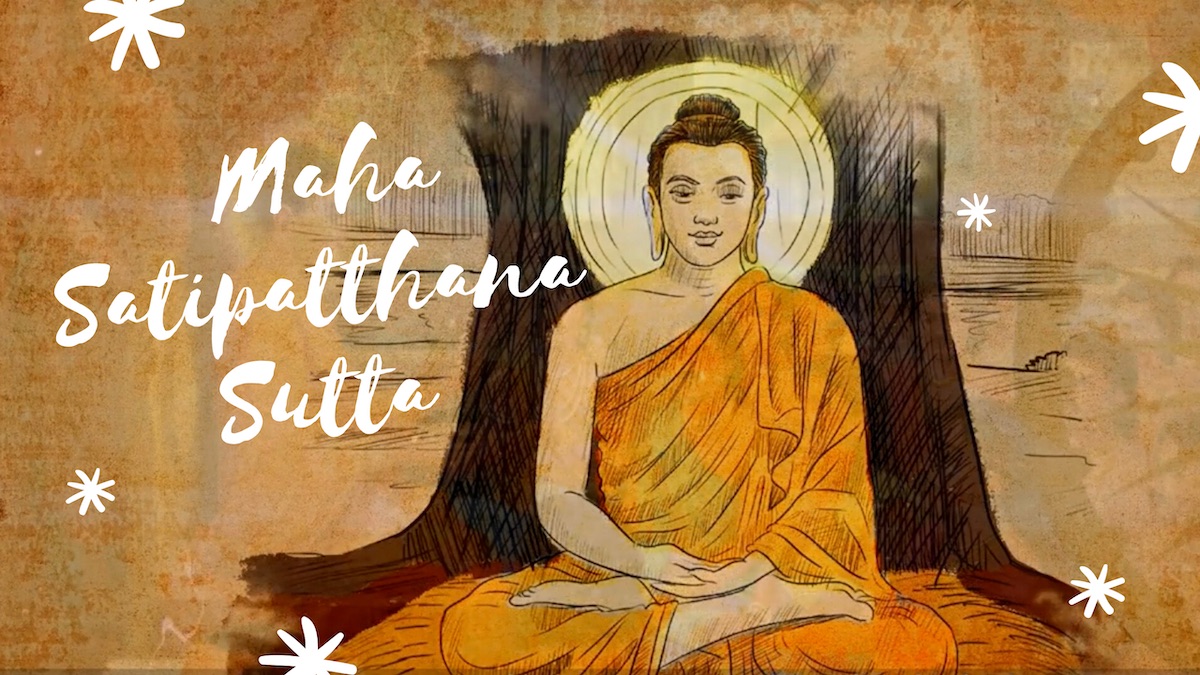
Trường Bộ Kinh
Digha Nikaya
22. Kinh Ðại Niệm xứ
(Mahàsatipatthana sutta)
Tôi nghe như vậy.
1. Một thời, Thế Tôn ở xứ Kuru (Câu lâu), tại Kammàssadhamma (Kiềm ma sắt đàm) – đô thị của xứ Kuru. Rồi Thế Tôn gọi các vị Tỷ kheo: “Này các Tỷ kheo.” Các Tỷ kheo trả lời Thế Tôn: “Bạch Thế Tôn.” Thế Tôn nói như sau:
– Này các Tỷ kheo, đây là con đường độc nhất, đưa đến thanh tịnh cho chúng sanh, vượt khỏi sầu bi, diệt trừ khổ ưu, thành tựu chánh lý, chứng ngộ Niết bàn. Ðó là Bốn niệm xứ.
Thế nào là bốn? Này các Tỷ kheo, ở đây vị Tỷ kheo sống quán thân trên thân, nhiệt tâm, tỉnh giác, chánh niệm, để chế ngự tham ưu ở đời; sống quán thọ trên các thọ, nhiệt tâm, tỉnh giác, chánh niệm, để chế ngự tham ưu ở đời; sống quán tâm trên tâm, nhiệt tâm, tỉnh giác, chánh niệm, để chế ngự tham ưu ở đời; sống quán pháp trên các pháp, nhiệt tâm, tỉnh giác, chánh niệm, để chế ngự tham ưu ở đời.
(Quán thân)
2. Này các Tỷ kheo, thế nào là Tỷ kheo sống quán thân trên thân?
Này các Tỷ kheo, ở đây Tỷ kheo đi đến khu rừng, đi đến gốc cây, hay đi đến ngôi nhà trống, và ngồi kiết già, lưng thẳng và an trú chánh niệm trước mặt. Tỉnh giác, vị ấy thở vô; tỉnh giác, vị ấy thở ra. Thở vô dài, vị ấy tuệ tri: “Tôi thở vô dài”; hay thở ra dài, vị ấy tuệ tri: “Tôi thở ra dài”; hay thở vô ngắn, vị ấy tuệ tri: “Tôi thở vô ngắn”; hay thở ra dài, vị ấy tuệ tri: “Tôi thở ra ngắn”; Cảm giác toàn thân, tôi sẽ thở vô”, vị ấy tập; “Cảm giác toàn thân, tôi sẽ thở ra”, vị ấy tập; “An tịnh thân hành, tôi sẽ thở vô”, vị ấy tập; “An tịnh thân hành, tôi sẽ thở ra”, vị ấy tập.
Này các tỷ kheo, như người thợ quay hay học trò người thợ quay tuệ tri thiện xảo, khi quay dài, tuệ tri rằng: “Tôi quay dài”; hay khi quay ngắn, tuệ tri rằng: “Tôi quay ngắn.” Cũng vậy, này các Tỷ kheo, Tỷ kheo thở vô dài, tuệ tri: “Tôi thở vô dài”; hay thở ra dài tuệ tri: “Tôi thở ra dài”; hay thở vô ngắn, tuệ tri: “Tôi thở vô ngắn”; hay thở ra ngắn, tuệ tri: “Tôi thở ra ngắn”; “Cảm giác toàn thân, tôi sẽ thở vô”, vị ấy tập; “Cảm giác toàn thân, tôi sẽ thở ra”, vị ấy tập; “An tịnh thân hành, tôi sẽ thở vô”, vị ấy tập; “An tịnh thân hành, tôi sẽ thở ra”, vị ấy tập.
Như vậy, vị ấy sống, quán thân trên nội thân hay sống quán thân trên ngoại thân; hay sống quán thân trên cả nội thân, ngoại thân; hay vị ấy sống quán tánh sanh khởi trên thân; hay sống quán tánh diệt tận trên thân; hay sống quán tánh sanh diệt trên thân. “Có thân đây”, vị ấy an trú chánh niệm như vậy, với hy vọng hướng đến chánh trí, chánh niệm. Và vị ấy sống không nương tựa, không chấp trước vật gì ở trên đời. Này các Tỷ kheo, như vậy Tỷ kheo sống quán thân trên thân.
3. Lại nữa, này các Tỷ keo, Tỷ kheo đi, tuệ tri: “Tôi đi”; hay đứng, tuệ tri: “Tôi đứng”; hay ngồi, tuệ tri: “Tôi ngồi”; hay nằm , tuệ tri: “Tôi nằm”. Thân thể được sử dụng như thế nào, vị ấy biết thân như thế ấy.
Như vậy, vị ấy sống quán thân trên nội thân; hay vị ấy sống quán thân trên ngoại thân; hay vị ấy sống quán thân trên cả nội thân, ngoại thân. Hay vị ấy sống quán tánh sanh khởi trên thân; hay vị ấy sống quán tánh diệt tận trên thân; hay vị ấy sống quán tánh sanh diệt trên thân. “Có thân đây”, vị ấy an trú chánh niệm như vậy với hy vọng hướng đến chánh trí, chánh niệm. Và vị ấy sống không nương tựa, không chấp trước một vật gì trên đời. Này các Tỷ kheo, như vậy Tỷ kheo sống quán thân trên thân.
4. Lại nữa, này các Tỷ kheo, Tỷ kheo, khi bước tới, bước lui, biết rõ việc mình đang làm. Khi ngó tới, ngó lui, biết rõ việc mình đang làm. Khi co tay khi duỗi tay biết rõ việc mình đang làm. Khi mang áo Sanghàti (Tăng-già-lê), mang bát, mang y, biết rõ việc mình đang làm. Khi ăn, uống, nhai, nếm, biết rõ việc mình đang làm. Khi đi đại tiện, tiểu tiện, biết rõ việc mình đang làm. Khi đi, đứng, ngồi, nằm, biết rõ việc mình đang làm.
Như vậy, vị ấy sống quán thân trên nội thân; hay sống quán thân trên ngoại thân; hay sống quán thân trên cả nội thân, ngoại thân. Hay vị ấy sống quán tánh sanh khởi trên thân; hay sống quán tánh diệt tận trên thân; hay sống quán tánh sanh diệt trên thân. “Có thân đây”, vị ấy an trú chánh niệm như vậy với hy vọng hướng đến chánh trí, chánh niệm. Và vị ấy sống không nương tựa, không chấp trước một vật gì trên đời. Này các Tỷ kheo, như vậy Tỷ kheo sống quán thân trên thân.
5. Lại nữa này các Tỷ kheo, Tỷ kheo quán sát thân này, dưới từ bàn chân trở lên, trên cho đến đảnh tóc, bao bọc bởi da và chứa đầy những vật bất tịnh sai biệt: “Trong thân này, đây là tóc, lông, móng, răng, da, thịt, gân, xương, thận, tủy, tim, gan, hoành cách mô, lá lách, phổi, ruột, màng ruột, bụng, phân, mật, đàm, mủ, máu, mồ hôi, mỡ, nước mắt, mỡ da, nước miếng, niêm dịch, nước ở khớp xương, nước tiểu.”
Này các Tỷ kheo, cũng như một bao đồ, hai đầu trống đựng đầy các loại hột như gạo, lúa, đậu xanh, đậu lớn, mè, gạo đã xay rồi. Một người có mắt, đổ các hột ấy ra và quan sát: “Ðây là hột gạo, đây là hột lúa, đây là đậu xanh, đây là đậu đỏ, đây là mè, đây là hột lúa đã xay rồi.” Cũng vậy, này các Tỷ kheo, một Tỷ kheo quán sát thân này dưới từ bàn chân trở lên, trên cho đến đảnh tóc, bao bọc bởi da và chứa đầy những vật bất tịnh sai biệt: “Trong thân này, đây là tóc, lông, móng, răng, da, thịt, gân, xương, tủy, thận, tim, gan, hoành cách mô, lá lách, phổi, ruột, màng ruột, bụng, phân, mật, đàm, mủ, máu, mồ hôi, mỡ, nước mắt, mỡ da, nước miếng, niêm dịch, nước ở khớp xương, nước tiểu.”
Như vậy vị ấy sống quán thân trên nội thân; hay sống quán thân trên ngoại thân; hay sống quán thân trên cả nội thân, ngoại thân. Hay vị ấy sống quán tánh sanh khởi trên thân; hay sống quán tánh diệt tận trên thân; hay sống quán tánh sanh diệt trên thân. “Có thân đây”, vị ấy an trú chánh niệm như vậy với hy vọng hướng đến chánh trí, chánh niệm. Và vị ấy sống không nương tựa, không chấp trước một vật gì trên đời. Này các Tỷ kheo, như vậy vị Tỷ kheo sống quán thân trên thân.
6. Lại nữa này các Tỷ kheo, Tỷ kheo quán sát thân này về vị trí các giới và sự sắp đặt các giới: “Trong thân này có địa đại, thủy đại, hỏa đại và phong đại.”
Này các Tỷ kheo, như một người đồ tể thiện xảo, hay đệ tử của một người đồ tể giết một con bò, ngồi cắt chia từng thân phần tại ngã tư đường. Cũng vậy này các Tỷ kheo, vị Tỷ kheo quán sát thân nay về vị trí các giới và về sự sắp đặt các giới: “Trong thân này có địa đại, thủy đại, hỏa đại và phong đại.”
Như vậy vị ấy sống quán thân trên nội thân; hay sống quán thân trên ngoại thân; hay sống quán thân trên cả nội thân, ngoại thân. Hay vị ấy sống quán tánh sanh khởi trên thân; hay sống quán tánh diệt tận trên thân; hay sống quán tánh sanh diệt trên thân. “Có thân đây”, vị ấy an trú chánh niệm như vậy, với hy vọng hướng đến chánh trí, chánh niệm, và vị ấy sống không nương tựa, không chấp trước một vật gì trên đời. Này các Tỷ kheo, như vậy Tỷ keo sống quán thân trên thân.
7. Lại nữa này các Tỷ kheo, Tỷ kheo, như thấy một thi thể quăng bỏ trong nghĩa địa một ngày, hai ngày, ba ngày, thi thể ấy trương phồng lên, xanh đen lại, nát thối ra. Tỷ kheo quán thân ấy như sau: “Thân này tánh chất là như vậy, bản tánh là như vậy, không vượt khỏi tánh chất ấy.”
Như vậy vị ấy sống quán thân trên nội thân; hay sống quán thân trên ngoại thân hay sống quán thân trên cả nội thân, ngoại thân. Hay vị ấy sống quán tánh sanh khởi trên thân; hay sống quán tánh diệt tận trên thân; hay sống quán tánh sanh diệt trên thân. “Có thân đây”, vị ấy an trú chánh niệm như vậy, với hy vọng hướng đến chánh trí, chánh niệm. Và vị ấy sống không nương tựa, không chấp trước một vật gì trên đời. Này các Tỷ kheo, như vậy Tỷ kheo sống quán thân trên thân.
8. Lại nữa này các Tỷ kheo, Tỷ kheo như thấy một thi thể quăng bỏ trong nghĩa địa bị các loài quạ ăn, hay bị các loài diều hâu ăn, hay bị các chim kên ăn; hay bị các loài chó ăn; hay bị các loài giả can ăn, hay bị các loài côn trùng ăn. Tỷ kheo quán thân ấy như sau: “Thân này tánh chất là như vậy, bản chất là như vậy, không vượt khỏi tánh chất ấy.”
Như vậy vị ấy sống quán thân trên nội thân; hay sống quán thên trên ngoại thân; hay sống quán thân trên cả nội thân, ngoại thân. Hay vị ấy sống quán tánh sanh khởi trên thân; hay sống quán tánh sanh diệt trên thân; hay sống quán tánh sanh diệt trên thân. “Có thân đây”, vị ấy an trú chánh niệm như vậy, với hy vọng hướng đến chánh trí, chánh niệm và vị ấy sống không nương tựa, không chấp trước một vật gì trên đời. Này các Tỷ kheo, như vậy Tỷ kheo sống quán thân trên thân.
9. Này các Tỷ kheo, lại nữa Tỷ kheo như thấy một thi thể bị quăng bỏ trong nghĩa địa; với các xương còn liên kết với nhau, còn dính thịt và máu, còn được các đường gân cốt lại; với các xương còn liên kết với nhau, không còn dính thịt nhưng còn dính máu, còn được các đường gân cột lại, với các xương còn liên kết với nhau, không còn dính thịt và máu, còn được các đường gân cột lại; chỉ còn có xương không dính lại với nhau, rải rác chỗ này chỗ kia, ở đây là xương tay, ở đây là xương chân, ở đây là xương ống, ở đây là xương bắp vế, ở đây là xương mông, ở đây là xương sống, ở đây là xương đầu,… Tỷ kheo quán thân ấy như sau: “Thân này tánh chất là như vậy, bản tánh là như vậy, không vượt khỏi tánh chất ấy”.
Như vậy vị ấy sống quán thân trên nội thân; hay sống quán thân trên ngoại thân; hay sống quán thân trên cả nội thân, ngoại thân. Hay vị ấy sống quán tánh sanh khởi trên thân; hay vị ấy sống quán tánh diệt tận trên thân; hay vị ấy sống quán tánh sanh diệt trên thân. “Có thân đây”, vị ấy sống an trú chánh niệm như vậy, với hy vọng hướng đến chánh trí, chánh niệm. Và vị ấy sống không nương tựa, không chấp trước một vật gì ở trên đời. Này các Tỷ kheo, như vậy Tỷ kheo sống quán thân trên thân.
10. Lại nữa này các Tỷ kheo, Tỷ kheo như thấy một thi thể quăng bỏ trong nghĩa địa, chỉ còn toàn xương trắng màu vỏ ốc… chỉ còn một đống xương lâu hơn một năm… chỉ còn là xương thối trở thành bột. Tỷ kheo quán thân ấy như sau: “Thân này tánh chất là như vậy, bản tánh là như vậy, không vượt khỏi tánh chất ấy.”
Như vậy vị ấy sống quán thân trên nội thân; hay sống quán thân trên ngoại thân; hay sống quán thân trên cả nội thân, ngoại thân. Hay vị ấy sống quán tánh sanh khởi trên thân; hay sống quán tánh diệt tận trên thân; hay sống quán tánh sanh diệt trên thân. “Có thân đây”, vị ấy sống an trú chánh niệm như vậy, với hy vọng hướng đến chánh trí, chánh niệm. Và vị ấy sống không nương tựa, không chấp trước một vật gì ở trên đời. Này các Tỷ kheo, như vậy Tỷ kheo sống quán thân trên thân.
(Quán thọ)
11. Này các Tỷ kheo, như thế nào Tỷ kheo sống quán thọ trên các thọ?
Này các Tỷ kheo, ở nơi đây Tỷ kheo khi cảm giác lạc thọ, biết rằng: “Tôi cảm giác lạc thọ”; khi cảm giác khổ thọ, biết rằng: “Tôi cảm giác khổ thọ”; khi cảm giác bất khổ bất lạc thọ, biết rằng: “Tôi cảm giác bất khổ bất lạc thọ”. Hay khi cảm giác lạc thọ thuộc vật chất biết rằng: “Tôi cảm giác lạc thọ thuộc vật chất”. Hay khi cảm giác lạc thọ không thuộc vật chất, biết rằng: “Tôi cảm giác lạc thọ không thuộc vật chất”. Hay khi cảm giác khổ thọ thuộc vật chất, biết rằng: “Tôi cảm giác khổ thọ thuộc vật chất”. Hay khi cảm giác khổ thọ không thuộc vật chất, biết rằng: “Tôi cảm giác khổ thọ không thuộc vật chất”. Hay khi cảm giác bất khổ bất lạc thọ thuộc vật chất, biết rằng: “Tôi cảm giác bất khổ bất lạc thọ thuộc vật chất”. Hay khi cảm giác bất khổ bất lạc thọ không thuộc vật chất, biết rằng: “Tôi cảm giác bất khổ bất lạc thọ không thuộc vật chất”.
Như vậy vị ấy sống quán thọ trên các nội thọ; hay sống quán thọ trên các ngoại thọ; hay sống quán thọ trên cả các nội thọ, ngoại thọ. Hay sống quán tánh sanh khởi trên các thọ; hay sống quán tánh diệt tận trên các thọ; hay sống quán tánh sanh diệt trên các thọ. “Có thọ đây”, vị ấy sống an trú chánh niệm như vậy, với hy vọng hướng đến chánh trí, chánh niệm. Và vị ấy sống không nương tựa, không chấp trước một vật gì ở trên đời. Này các Tỷ kheo, như vậy Tỷ kheo sống quán thọ trên các thọ.
(Quán tâm)
12. Này các Tỷ kheo, như thế nào Tỷ kheo sống quán tâm trên tâm?
Này các Tỷ kheo, ở đây vị Tỷ kheo: “Với tâm có tham, biết rằng tâm có tham”; hay “Với tâm không tham, biết rằng tâm không tham”; hay “Với tâm có sân, biết rằng tâm có sân”; hay “Với tâm không sân, biết rằng tâm không sân”; hay “Với tâm có si, biết rằng tâm có si”; hay “Với tâm không si, biết rằng tâm không si”; hay “Với tâm thâu nhiếp, biết rằng tâm được thâu nhiếp”; hay “Với tâm tán loạn, biết rằng tâm bị tán loạn”; hay “Với tâm quảng đại, biết rằng tâm được quảng đại”; hay “Với tâm không quảng đại, biết rằng tâm không được quảng đại”; hay “Với tâm hữu hạn, biết rằng tâm hữu hạn”; hay “Với tâm vô thượng, biết rằng tâm vô thượng”; hay “Với tâm có định, biết rằng tâm có định”; hay “Với tâm không định, biết rằng tâm không định”; hay “Với tâm giải thoát, biết rằng tâm có giải thoát”; hay “Với tâm không giải thoát, biết rằng tâm không giải thoát”.
Như vậy vị ấy sống quán tâm trên nội tâm; hay sống quán tâm trên ngoại tâm; hay sống quán tâm trên nội tâm, ngoại tâm. Hay sống quán tánh sanh khởi trên tâm; hay sống quán tánh diệt tận trên tâm; hay sống quán tánh sanh diệt trên tâm. “Có tâm đây”, vị ấy sống an trú chánh niệm như vậy, với hy vọng hướng đến chánh trí, chánh niệm. Và vị ấy sống không nương tựa, không chấp trước một vật gì trên đời. Này các Tỷ kheo, như vậy vị Tỷ kheo sống quán tâm trên tâm.
(Quán pháp)
13. Này các Tỷ kheo, thế nào là vị Tỷ kheo sống quán pháp trên các pháp?
Này các Tỷ kheo, ở đây Tỷ kheo sống quán pháp trên các pháp đối với năm triền cái. Và này các Tỷ kheo, thế nào là vị Tỷ kheo sống quán pháp trên các pháp đối với năm triền cái?
Này các Tỷ kheo, ở đây Tỷ kheo, nội tâm có tham dục, tuệ tri: “Nội tâm tôi có tham dục”; hay nội tâm không có tham dục, tuệ tri rằng: “Nội tâm tôi không có tham dục”. Và với tham dục chưa sanh nay sanh khởi, vị ấy tuệ tri như vậy. Và với tham dục đã sanh nay được đoạn diệt, vị ấy tuệ tri như vậy. Và với tham dục đã được đoạn diệt, tương lai không sanh khởi nữa, vị ấy tuệ tri như vậy.
Hay nội tâm có sân hận, tuệ tri rằng: “Nội tâm tôi có sân hận”; hay nội tâm không có sân hận, tuệ tri rằng: “Nội tâm tôi không có sân hận.” Và với sân hận chưa sanh nay sanh khởi, vị ấy tuệ tri như vậy. Và với sân hận đã sanh nay được đoạn diệt, vị ấy tuệ tri như vậy. Và với sân hận đã được đoạn diệt, tương lai không sanh khởi nữa, vị ấy tuệ tri như vậy.
Hay nội tâm có hôn trầm thụy miên, tuệ tri rằng: “Nội tâm tôi có hôn trầm thụy miên”; hay nội tâm không có hôn trầm thụy miên, tuệ tri rằng: “Nội tâm tôi không có hôn trầm thụy miên”. Và với hôn trầm thụy miên chưa sanh nay sanh khởi, vị ấy tuệ tri như vậy. Và với hôn trầm thụy miên đã sanh nay được đoạn diệt, vị ấy tuệ tri như vậy. Và với hôn trầm thụy miên đã được đoạn diệt, tương lai không sanh khởi nữa, vị ấy tuệ tri như vậy.
Hay nội tâm có trạo hối, tuệ tri rằng: “Nội tâm tôi có trạo hối”; hay nội tâm không có trạo hối, tuệ tri rằng: “Nội tâm tôi không có trạo hối”. Và với trạo hối chưa sanh nay sanh khởi, vị ấy tuệ tri như vậy. Và với trạo hối đã sanh nay được đoạn diệt, vị ấy tuệ tri như vậy. Và với trạo hối đã được đoạn diệt, tương lai không sanh khởi nữa, vị ấy tuệ tri như vậy.
Hay nội tâm có nghi, tuệ tri rằng: “Nội tâm tôi có nghi”; hay nội tâm không có nghi, tuệ tri rằng: “Nội tâm tôi không có nghi.” Và với nghi chưa sanh nay sanh khởi, vị ấy tuệ tri như vậy. Và với nghi đã sanh, nay được đoạn diệt, vị ấy tuệ tri như vậy, và với nghi đã được đoạn diệt, tương lai không sanh khởi nữa, vị ấy tuệ tri như vậy.
Như vậy vị ấy sống quán pháp trên các nội pháp; hay sống quán pháp trên các ngoại pháp; hay sống quán pháp trên cả các nội pháp, ngoại pháp. Hay sống quán tánh sanh khởi trên các pháp; hay sống quán tánh diệt tận trên các pháp; hay sống quán tánh sanh diệt trên các pháp. “Có những pháp ở đây”, vị ấy sống an trú chánh niệm như vậy, với hy vọng hướng đến chánh trí, chánh niệm. Và vị ấy sống không nương tựa, không chấp trước một vật gì trên đời. Này các Tỷ kheo, như vậy Tỷ kheo sống quán pháp trên các pháp, đối với năm triền cái.
14. Lại nữa, này các Tỷ kheo, Tỷ kheo sống quán pháp trên các pháp đối với Năm Thủ uẩn. Này các Tỷ kheo, thế nào là Tỷ kheo sống quán pháp trên các pháp đối với Năm Thủ uẩn?
Này các Tỷ kheo, Tỷ kheo suy tư: “Ðây là sắc, đây là sắc sanh, đây là sắc diệt. Ðây là thọ, đây là thọ sanh, đây là thọ diệt. Ðây là tưởng, đây là tưởng sanh, đây là tưởng diệt. Ðây là hành, đây là hành sanh, đây là hành diệt. Ðây là thức, đây là thức sanh, đây là thức diệt”. Như vậy vị ấy sống quán pháp trên các nội pháp; hay sống quán pháp trên các ngoại pháp; hay sống quán pháp trên các nội pháp, ngoại pháp; hay sống quán tánh sanh khởi trên các pháp; hay sống quán tánh diệt tận trên các pháp; hay sống quán tánh sanh diệt trên các pháp. “Có những pháp ở đây”, vị ấy sống an trú chánh niệm như vậy, với hy vọng hướng đến chánh trí, chánh niệm. Và vị ấy sống không nương tựa, không chấp trước một vật gì ở trên đời. Này các Tỷ kheo, như vậy Tỷ kheo sống quán pháp trên các pháp đối với Năm Thủ uẩn.
15. Lại nữa này các Tỷ kheo, Tỷ kheo sống quán pháp trên các pháp đối với Sáu Nội Ngoại xứ.
Này các Tỷ kheo, thế nào là Tỷ kheo sống quán pháp trên các pháp đối với Sáu Nội Ngoại xứ?
Này các Tỷ kheo, ở đây Tỷ kheo tuệ tri con mắt và tuệ tri các sắc, do duyên hai pháp này, kiết sử sanh khởi, vị ấy tuệ tri như vậy; và với kiết sử chưa sanh nay sanh khởi, vị ấy tuệ tri như vậy; và với kiết sử đã sanh nay được đoạn diệt, vị ấy tuệ tri như vậy; và với kiết sử đã được đoạn diệt, tương lai không sanh khởi nữa, vị ấy tuệ tri như vậy… và tuệ tri tai và tuệ tri các tiếng… và tuệ tri mũi và tuệ tri các hương… và tuệ tri lưỡi và tuệ tri các vị… và tuệ tri thân và tuệ tri các xúc… và tuệ tri ý và tuệ tri các pháp; do duyên hai pháp này, kiết sử sanh khởi, vị ấy tuệ tri như vậy; và với kiết sử chưa sanh nay sanh khởi, vị ấy tuệ tri như vậy; và với kiết sử đã sanh nay được đoạn diệt, vị ấy tuệ tri như vậy; và với kiết sử đã được đoạn diệt, tương lai không sanh khởi nữa, vị ấy tuệ tri như vậy.
Như vậy vị ấy sống quán pháp trên các nội pháp; hay sống quán pháp trên các ngoại pháp; hay sống quán pháp trên cả các nội pháp, ngoại pháp; hay sống quán tánh sanh khởi trên các pháp; hay sống quán tánh diệt tận trên các pháp; hay sống quán tánh sanh diệt trên các pháp. “Có những pháp ở đây”, vị ấy sống an trú chánh niệm như vậy, với hy vọng hướng đến chánh trí, chánh niệm. Và vị ấy sống không nương tựa, không chấp trước một vật gì trên đời. Này các Tỷ kheo, như vậy Tỷ kheo sống quán pháp trên các pháp, đối với Sáu Nội Ngoại xứ.
16. Lại nữa này các Tỷ kheo, Tỷ kheo sống quán pháp trên các pháp đối với Bảy Giác chi.
Này các Tỷ kheo, thế nào là Tỷ kheo sống quán pháp trên các pháp đối với Bảy Giác chi? Này các Tỷ kheo, ở đây Tỷ kheo, nội tâm có Niệm Giác chi, tuệ tri rằng: “Nội tâm tôi có Niệm Giác chi”, hay nội tâm không có Niệm Giác chi, tuệ tri rằng: “Nội tâm tôi không có Niệm Giác chi”; và với Niệm Giác chi chưa sanh nay sanh khởi, vị ấy tuệ tri như vậy, và với Niệm Giác chi đã sanh, nay được tu tập viên thành, vị ấy tuệ tri như vậy.
Hay nội tâm có Trạch pháp Giác chi…
Hay nội tâm có Tinh tấn Giác chi…
Hay nội tâm có Hỷ Giác chi…
Hay nội tâm có Khinh an Giác chi…
Hay nội tâm có Ðịnh Giác chi…
Hay nội tâm có Xả Giác chi; tuệ tri rằng: “Nội tâm tôi có Xả Giác chi”; hay nội tâm không có Xả Giác chi, tuệ tri rằng: “Nội tâm tôi không có Xả Giác chi.” Và với Xả Giác chi chưa sanh nay sanh khởi, vị ấy tuệ tri như vậy; và với Xả Giác chi đã sanh nay được tu tập viên thành, vị ấy tuệ tri như vậy.
Như vậy vị ấy sống quán pháp trên các nội pháp; hay sống quán pháp trên các ngoại pháp; hay sống quán pháp trên cả các nội pháp, ngoại pháp. Hay sống quán tánh sanh khởi trên các pháp; hay sống quán tánh diệt tận trên các pháp; hay sống quán tánh sanh diệt trên các pháp. “Có những pháp ở đây”; vị ấy sống an trú chánh niệm như vậy, với hy vọng hướng đến chánh trí, chánh niệm. Và vị ấy sống không nương tựa, không chấp trước một vật gì trên đời. Này các Tỷ kheo, như vậy Tỷ kheo sống quán pháp trên các pháp đối với Bảy Giác chi.
17. Lại nữa này các Tỷ kheo, vị ấy sống quán pháp trên các pháp đối với Bốn Sự thật.
Này các Tỷ kheo, thế nào là Tỷ kheo sống quán pháp trên các pháp đối với Bốn Sự thật? Này các Tỷ kheo, ở đây Tỷ kheo như thật tuệ tri: “Ðây là khổ”; như thật tuệ tri: “Ðây là khổ tập”; như thật tuệ tri: “Ðây là khổ diệt”; như thật tuệ tri: “Ðây là con đường đưa đến khổ diệt”.
18. Và này các Tỷ kheo, thế nào Khổ Thánh đế? Sanh là khổ, già là khổ, chết là khổ, sầu, bi. khổ, ưu, não là khổ, cầu không được là khổ, tóm lại Năm Thủ uẩn là khổ.
Này các Tỷ kheo thế nào là sanh? Mỗi mỗi hạng chúng sanh trong từng giới loại, sự xuất sản, xuất sanh, xuất thành, tái sanh của họ, sự xuất hiện các uẩn, sự hoạch đắc các căn. Này các Tỷ kheo, như vậy gọi là sanh.
Này các Tỷ kheo, thế nào là già? Mỗi mỗi hạng chúng sanh, trong từng giới hạn, sự niên lão, sự hủy hoại, trạng thái rụng răng, trạng thái tóc bạc, da nhăn, tuổi thọ rút ngắn, các căn hủy hoại. Này các Tỷ kheo, như vậy là già.
Này các Tỷ kheo, thế nào là chết? Mỗi mỗi hạng chúng sanh trong từng giới loại, sự tạ thế, sự từ trần, thân hoại, sự diệt vong, sự chết, sự tử vong, thời đã đến, các uẩn đã tận diệt, sự vất bỏ tử thi. Này các Tỷ kheo, như vậy gọi là chết.
Này các Tỷ kheo, thế nào gọi là sầu? Này các Tỷ kheo, với những ai gặp phải tai nạn này hay tai nạn khác; với những ai cảm thọ sự đau khổ này hay sự đau khổ khác, sự sầu, sự sầu lo, sự sầu muộn, nội sầu, mọi khổ sầu của người ấy. Này các Tỷ kheo, như vậy gọi là sầu.
Này các Tỷ kheo, thế nào là bi? Này các Tỷ kheo, với những ai gặp phải tai nạn này hay tai nạn khác ; với những ai cảm thọ sự đau khổ này hay sự đau khổ khác, sự bi ai, sự bi thảm, sự than van, sự than khóc, sự bi thán, sự bi thống của người ấy. Này các Tỷ kheo, như vậy gọi là bi.
Này các Tỷ kheo, thế nào là khổ? Này các Tỷ kheo, sự đau khổ về thân, sự không sảng khoái về thân, sự đau khổ do thân cảm thọ, sự không sảng khoái do thân cảm thọ. Này các Tỷ kheo, như vậy gọi là khổ.
Này các Tỷ kheo, thế nào là ưu? Này các Tỷ kheo, sự đau khổ về tâm, sự không sảng khoái về tâm, sự đau khổ do tâm cảm thọ, sự không sảng khoái do tâm cảm thọ. Này các Tỷ kheo, như vậy gọi là ưu.
Này các Tỷ kheo, thế nào là não? Này các Tỷ kheo, với những ai gặp tai nạn này hay tai nạn khác; với những ai cảm thọ sự đau khổ này hay sự đau khổ khác, sự áo não, sự bi não, sự thất vọng, sự tuyệt vọng của người ấy. Này các Tỷ kheo, như vậy gọi là não.
Này các Tỷ kheo, thế nào là cầu bất đắc khổ? Này các Tỷ kheo, chúng sanh bị sanh chi phối, khởi sự mong cầu: “Mong rằng ta khỏi bị sanh chi phối, mong rằng ta khỏi phải đi thác sanh”. Lời cầu mong ấy không được thành tựu. Như vậy gọi là cầu bất đắc khổ! Này các Tỷ kheo, chúng sanh bị già chi phối… chúng sanh bị bệnh chi phối… chúng sanh bị chết chi phối.. chúng sanh bị sầu, bi, khổ, ưu, não chi phối, khởi sự mong cầu: “Mong rằng ta khỏi bị sầu, bi, khổ, ưu, não chi phối! Mong rằng ta khỏi đương chịu sầu, bi, khổ, ưu, não”. Lời mong cầu ấy không được thành tựu. Như vậy là cầu bất đắc khổ.
Này các Tỷ kheo, như thế nào là tóm lại, Năm Thủ uẩn là khổ? Như Sắc thủ uẩn, Thọ thủ uẩn, Tưởng thủ uẩn, Hành thủ uẩn, Thức thủ uẩn. Này các Tỷ kheo, như vậy tóm lại Năm Thủ uẩn là khổ.
19. Này các Tỷ kheo, thế nào là Khổ tập Thánh đế? Sự tham ái đưa đến tái sanh, câu hữu với hỷ và tham, tìm cầu hỷ lạc chỗ này chỗ kia. Như dục ái, hữu ái, vô hữu ái.
Này các Tỷ kheo, sự tham ái này khi sanh khởi thì sanh khởi ở đâu, khi an trú thì an trú ở đâu? Ở đời, sắc gì thân ái, sắc gì khả ái? Ở đời con mắt là sắc thân ái, là sắc khả ái. Sự tham ái này khi sanh khởi thì sanh khởi ở đấy, khi an trú thì an trú ở đấy. Ở đời cái tai… ở đời mũi… ở đời lưỡi… ở đời thân… ở đời ý là sắc thân ái, là sắc khả ái. Sự tham ái này khi sanh khởi thì sanh khởi ở đấy, khi an trú thì an trú ở đấy.
Ở đời các sắc… ở đời các tiếng… ở đời các hương… ở đời các vị… ở đời các cảm xúc… ở đời các pháp là sắc thân ái, là sắc khả ái. Sự tham ái này khi sanh khởi thì sanh khởi ở đấy, khi an trú thì an trú ở đấy.
Ở đời nhãn thức… ở đời nhĩ thức… ở đời tỷ thức… ở đời thiệt thức… ở đời thân thức… ở đời ý thức là sắc thân ái, là sắc khả ái. Sự tham ái này khi sanh khởi thì sanh khởi ở đấy, khi an trú thì an trú ở đấy.
Ở đời nhãn xúc… ở đời nhĩ xúc… ở đời tỷ xúc… ở đời thiệt xúc… ở đời thân xúc… ở đời ý xúc là sắc thân ái, à sắc khả ái. Sự tham ái này khi sanh khởi thì sanh khởi ở đấy, khi an trú thì an trú ở đấy.
Ở đời nhãn xúc sở sanh thọ… ở đời nhĩ xúc sở sanh thọ… ở đời tỷ xúc sở sanh thọ… ở đời thiệt xúc sở thanh thọ… ở đời thân xúc sở sanh thọ… ở đời ý xúc sở sanh thọ là sắc thân ái, là sắc khả ái. Sự tham ái này khi sanh khởi thì sanh khởi ở đấy, khi an trú thì an trú ở đấy.
Ở đời sắc tưởng… ở đời thanh tưởng… ở đời hương tưởng… ở đời vị tưởng… ở đời xúc tưởng… ở đời pháp tưởng là sắc thân ái, là sắc khả ái. Sự tham ái này khi sanh khởi thì sanh khởi ở đấy, khi an trú thì an trú ở đấy.
Ở đời sắc tư… ở đời thanh tư… ở đời hương tư… ở đời vị tư… ở đời xúc tư… ở đời pháp tư là sắc thân ái, là sắc khả ai. Sự tham ái này khi sanh khởi thì sanh khởi ở đấy, khi an trú thì an trú ở đấy.
Ở đời sắc ái… ở đời thanh ái… ở đời hương ái… ở đời vị ái… ở đời xúc ái… ở đời pháp ái là sắc thân ái, là sắc khả ái. Sự tham ái này khi sanh khởi thì sanh khởi ở đấy, khi an trú thì an trú ở đây.
Ở đời sắc tầm … ở đời thanh tầm… ở đời hương tầm… ở đời vị tầm… ở đời xúc tầm… ở đời pháp tầm là sắc thân ái, là sắc khả ái. Sự tham ái này khi sanh khởi thì sanh khởi ở đấy, khi an trú thì an trú ở đấy.
Ở đời sắc tứ… ở đời thanh tứ… ở đời hương tứ… ở đời vị tứ… ở đời xúc tứ… ở đời pháp tứ là sắc thân ái, là sắc khả ái. Sự tham ái này khi sanh khởi thì sanh khởi ở đấy, khi an trú thì an trú ở đấy. Này các Tỷ kheo, như vậy gọi là Khổ tập Thánh đế.
20. Này các Tỷ kheo, và thế nào là Khổ diệt Thánh đế? Sự diệt tận không còn luyến tiếc tham ái ấy, sự xả ly, sự khí xả, sự giải thoát, sự vô nhiễm (tham ái ấy).
Này các Tỷ kheo, sự tham ái này khi xả ly thì xả ly ở đâu, khi diệt trừ thì diệt trừ ở đâu? Ở đời các sắc gì thân, các sắc gì ái, sự tham ái này khi xả ly thì xả ly ở đấy, khi diệt trừ thì diệt trừ ở đấy.
Ở đời sắc gì thân ái, sắc gì khả ái? Ở đời con mắt là sắc thân ái, là sắc khả ái. Sự tham ái này khi xả ly thì xả ly ở đấy, khi diệt trừ thì diệt trừ ở đấy. Ở đời lỗ tai… ở đời mũi… ở đời lưỡi… ở đời thân… ở đời ý là sắc thân ái, là sắc khả ái. Sự tham ái này khi xả ly thì xả ly ở đấy, khi diệt trừ thì diệt trừ ở đấy.
Ở đời các sắc… ở đời các tiếng… ở đời các mùi hương… ở đời các vị.. ở đời các xúc… ở đời các pháp là sắc thân ái, là sắc khả ái. Sự tham ái này khi xả ly thì xả ly ở đấy, khi diệt trừ thì diệt trừ ở đấy.
Ở đời nhãn thức… ở đời nhĩ thức… ở đời tỷ thức… ở đời thiệt thức… ở đời ý thức là sắc thân ái, là sắc khả ái. Sự tham ái khi xả ly thì xả ly ở đấy, khi diệt trừ thì diệt trừ ở đấy.
Ở đời nhãn xúc… ở đời nhĩ xúc… ở đời tỷ xúc… ở đời thiệt xúc… ở đời thân xúc… ở đời ý xúc là sắc thân ái, là sắc khả ái. Sự tham ái này khi xả ly thì xả ly ở đấy, khi diệt trừ thì diệt trừ ở đấy.
Ở đời nhãn xúc sở sanh thọ… ở đời nhĩ xúc sở sanh thọ… ở đời tỷ xúc sở sanh thọ… ở đời thiệt xúc sở sanh thọ… ở đời thân xúc sở sanh thọ.. ở đời ý xúc sở sanh thọ là sắc thân ái, là sắc khả ái. Sự tham ái này khi xả ly thì xả ly ở đấy, khi diệt trừ thì diệt trừ ở đấy.
Ở đời sắc tưởng… ở đời thanh tưởng… ở đời hương tưởng… ở đời vị tưởng… ở đời xúc tưởng… ở đời pháp tưởng là sắc thân ái, là sắc khả ái. Sự tham ái này khi xả ly thì xả ly ở đấy, khi diệt trừ thì diệt trừ ở đấy.
Ở đời sắc tư… ở đời thanh tư… ở đời hương tư… ở đời vị tư… ở đời xúc tư… ở đời pháp tư là sắc thân ái, là sắc khả ái. Sự tham ái này khi xả ly thì xả ly ở đấy, khi diệt trừ thì diệt trừ ở đấy.
Ở đời sắc ái… ở đời thanh ái… ở đời hương ái… ở đời vị ái… ở đời xúc ái… ở đời pháp ái là sắc thân ái, là sắc khả ái. Sự tham ái này khi xả ly thì xả ly ở đấy, khi diệt trừ thì diệt trừ ở đấy.
Ở đời sắc tầm… ở đời thanh tầm… ở đời hương tầm… ở đời vị tầm… ở đời xúc tầm… ở đời pháp tàm là sắc thân ái, là sắc khả ái. Sự tham ái này khi xả ly thì xả ly ở đấy, khi diệt trừ thì diệt trừ ở đấy.
Ở đời sắc tứ… ở đời thanh tứ… ở đời hương tứ… ở đời vị tứ… ở đời xúc tứ… ở đời pháp tứ là sắc thân ái, là sắc khả ái. Sự tham ái này khi xả ly thì xả ly ở đấy, khi diệt trừ thì diệt trừ ở đấy.
Này các Tỷ kheo, như vậy gọi là Khổ diệt Thánh đế.
21. Này các Tỷ kheo, thế nào là Khổ diệt đạo Thánh đế. Ðó là bát chi Thánh đạo, tức là Chánh tri kiến, Chánh tư duy, Chánh ngữ, Chánh nghiệp, Chánh mạng, Chánh tin tấn, Chánh niệm, Chánh định.
Này các Tỷ kheo, thế nào là Chánh tri kiến? Này các Tỷ kheo, tri kiến về Khổ, tri kiến về Khổ tập, tri kiến về Khổ diệt, tri kiến về Khổ diệt đạo. Này các Tỷ kheo, như vậy gọi là Chánh tri kiến.
Này các Tỷ kheo, thế nào là Chánh tư duy? Tư duy về ly dục, tư duy về vô sân, tư duy về bất hại. Này các tỷ kheo, như vậy gọi là Chánh tư duy.
Này các Tỷ kheo thế nào là Chánh ngữ? Tự chế không nói láo, tự chế không nói hai lưỡi, tự chế không ác khẩu, tự chế không nói lời phù phiếm. Này các Tỷ kheo, như vậy gọi là Chánh ngữ.
Này các Tỷ kheo, thế nào là Chánh nghiệp? Tự chế không sát sanh, tự chế không trộm cướp, tự chế không tà dâm. Này các Tỷ kheo, như vậy gọi là Chánh nghiệp.
Này các Tỷ kheo, thế nào là Chánh mạng? Này các Tỷ kheo, ở đây vị Thánh đệ tử từ bỏ tà mạng, sinh sống bằng chánh mạng. Này các Tỷ kheo, như vậy gọi là Chánh mạng.
Này các Tỷ kheo, và thế nào là Chánh tinh tấn? Này các Tỷ kheo, ở đây Tỷ kheo, đối với các ác, bất thiện pháp chưa sanh, khởi lên ý muốn không cho sanh khởi; vị này nỗ lực, tinh tấn, quyết tâm, trì chí. Ðối với các ác, bất thiện pháp đã sanh, khởi lên ý muốn trừ diệt, vị này nỗ lực, tinh tấn, quyết tâm, trì chí. Ðối với các thiện pháp chưa sanh, khởi lên ý muốn khiến cho sanh khởi; vị này nỗ lực, tinh tấn, quyết tâm, trì chí. Ðối với các thiện pháp đã sanh, khởi lên ý muốn khiến cho an trú, không cho băng hoại, khiến cho tăng trưởng, phát triển, viên mãn. Vị này nỗ lực, tinh tấn, quyết tâm, trì chí. Này các Tỷ kheo, như vậy gọi là Chánh tinh tấn.
Này các Tỷ kheo, thế nào là Chánh niệm? Này các Tỷ kheo, ở đây vị Tỷ kheo sống quán thân trên thân, nhiệt tâm, tỉnh giác, chánh niệm, để chế ngự tham ưu ở đời; trên các cảm thọ… trên các tâm… quán pháp trên các pháp, tinh cần tỉnh giác, chánh niệm để chế ngự tham ưu ở đời. Này các Tỷ kheo, như vậy gọi là Chánh niệm.
Này các Tỷ kheo, thế nào là Chánh định? Này các Tỷ kheo, ở đây Tỷ kheo ly dục, ly ác bất thiện pháp, chứng và trú Thiền thứ nhất, một trạng thái hỷ lạc do ly dục sanh, với tầm, với tứ. Tỷ kheo ấy diệt tầm, diệt tứ, chứng và trú Thiền thứ hai, một trạng thái hỷ lạc do định sanh, không tầm, không tứ, nội tĩnh nhất tâm. Tỷ kheo ấy ly hỷ trú xả, chánh niệm tỉnh giác, thân cảm sự lạc thọ mà các bậc Thánh gọi là xả niệm lạc trú, chứng và trú Thiền thứ ba. Tỷ kheo ấy xả lạc, xả khổ, diệt hỷ ưu đã cảm thọ trước, chứng và trú Thiền thứ tư, không khổ, không lạc, xả niệm thanh tịnh. Này các Tỷ kheo, như vậy gọi là Chánh định.
Này các Tỷ kheo, như vậy gọi là Khổ diệt đạo thánh đế.
Như vậy vị ấy sống quán pháp trên các nội pháp; hay sống quán pháp trên các ngoại pháp; hay sống quán pháp trên các nội pháp, ngoại pháp. Hay sống quán tánh sanh khởi trên các pháp; hay sống quán tánh diệt tận trên các pháp; hay sống quán tánh sanh diệt trên các pháp. “Có những pháp ở đây”, vị ấy sống an trú chánh niệm như vậy, với hy vọng hướng đến chánh trí, chánh niệm. Và vị ấy sống không nương tựa, không chấp trước một vật gì trên đời. Này các Tỷ kheo, như vậy Tỷ kheo sống quán pháp trên các pháp đối với Bốn Thánh đế.
22. Này các Tỷ kheo, vị nào tu tập Bốn Niệm xứ này như vậy trong bảy năm, vị ấy có thể chứng một trong hai quả sau đây: Một là chứng Chánh trí ngay trong hiện tại; hai là nếu còn hữu dư y, chứng quả Bất hoàn. Này các Tỷ kheo, không cần gì đến bảy năm, một vị nào tu tập Bốn Niệm xứ này như vậy trong sáu năm… trong năm năm… trong bốn năm… trong ba năm… trong hai năm… trong một năm, vị ấy có thể chứng một trong hai quả sau đây: Một là chứng Chánh trí ngay trong hiện tại; hai là nếu còn hữu dư y, chứng quả Bất hoàn. Này các Tỷ kheo, không cần gì đến một năm, một vị nào tu tập Bốn Niệm xứ này trong bảy tháng, vị ấy có thể chứng một trong hai quả sau đây: Một là chứng Chánh trí ngay trong hiện tại, hay nếu còn hữu dư y, thì chứng quả Bất hoàn. Này các Tỷ-kheo, không cần gì bảy tháng, một vị nào tu tập Bốn Niệm xứ này trong sáu tháng… trong năm tháng… trong bốn tháng… trong ba tháng… trong hai tháng… trong một tháng… trong nửa tháng… vị ấy có thể chứng một trong hai quả sau đây: Một là chứng Chánh trí ngay trong hiện tại, hai là nếu còn hữu dư y, thì chứng quả Bất hoàn. Này các Tỷ-kheo, không cần gì nửa tháng, một vị nào tu tập Bốn Niệm xứ này trong bảy ngày, vị ấy có thể chứng một trong hai quả sau đây: Một là chứng Chánh trí ngay trong hiện tại, hai là nếu còn hữu dư y, thì chứng quả Bất hoàn.
Này các Tỷ kheo, đây là con đường độc nhất đưa đến sự thanh tịnh cho chúng sanh, vượt khỏi sầu bi, diệt trừ khổ ưu, thành tựu Chánh lý, chứng ngộ Niết Bàn. Ðó là Bốn Niệm xứ.
Thế Tôn thuyết pháp đã xong. Các Tỷ kheo ấy hoan hỷ tín thọ lời Thế Tôn dạy.
Hòa thượng Thích Minh Châu dịch Việt
(Bình Anson hiệu đính: 17-04-2004, dựa theo bản Anh ngữ “The Long Discourses of the Buddha”, Maurice Walshe dịch, 1987)
KINH ĐẠI NIỆM XỨ BẢN TIẾNG PALI & TIẾNG ANH (nguồn Tipitaka.org):
| Mahāsatipaṭṭhāna Sutta Evaṃ me sutaṃ.Ekaṃ samayaṃ bhagavā kurūsu viharati kammāsadhammaṃ nāma kurūnaṃ nigamo. Tatra kho bhagavā bhikkhū āmantesi, ‘Bhikkhavo’1 ti. ‘Bhaddante’ ti te bhikkhū bhagavato paccassosuṃ. Bhagavā etadavoca: | The Great Discourse on the Establishing of AwarenessThus have I heard:At one time the Enlightened One was staying among the Kurus at Kammāsadhamma, a market town of the Kuru people. There the Enlightened One addressed the monks thus: “Monks,”1 and they replied, “Venerable Sir!” Then the Enlightened One spoke as follows: |
| 1. Uddeso | 1. Introduction |
| Ekāyano ayaṃ, bhikkhave, maggo sattānaṃ visuddhiyā, sokaparidevānaṃ samatikkamāya, dukkhadomanassānaṃ atthaṅgamāya, ñāyassa adhigamāya, nibbānassa sacchikiriyāya, yadidaṃ cattāro satipaṭṭhānā.2 | This is the one and only way, monks, for the purification of beings, for the overcoming of sorrow and lamentation, for the extinguishing of suffering and grief, for walking on the path of truth, for the realisation of nibbāna: that is to say, the fourfold establishing of awareness.2 |
| Katame cattāro? Idha, bhikkhave, bhikkhu kāye kāyānupassī viharati ātāpī sampajāno3 satimā, vineyya loke abhijjhādomanassaṃ. Vedanāsu vedanānupassī viharati ātāpī sampajāno satimā, vineyya loke abhijjhādomanassaṃ. Citte cittānupassī viharati ātāpī sampajāno satimā, vineyya loke abhijjhādomanassaṃ. Dhammesu dhammānupassī viharati ātāpī sampajāno satimā, vineyya loke abhijjhādomanassaṃ.4 | Which four? Here, monks, a monk dwells ardent with awareness and constant thorough understanding of impermanence, 3observing body in body, having removed craving and aversion towards the world [of mind and matter]; he dwells ardent with awareness and constant thorough understanding of impermanence, observing sensations in sensations, having removed craving and aversion towards the world [of mind and matter]; he dwells ardent with awareness and constant thorough understanding of impermanence, observing mind in mind, having removed craving and aversion towards the world [of mind and matter]; he dwells ardent with awareness and constant thorough understanding of impermanence, observing mental contents in mental contents, having removed craving and aversion towards the world [of mind and matter].4 |
| 2. Kāyānupassanā | 2. The Observation of Body |
| A. Ānāpānapabbaṃ | A. Section on Respiration |
| Kathaṃ ca pana, bhikkhave, bhikkhu kāye kāyānupassī viharati? | And how, monks, does a monk dwell observing body in body? |
| Idha, bhikkhave, bhikkhu araññagato vā rukkhamūlagato vā suññāgāragato vā nisīdati pallaṅkaṃ ābhujitvā, ujuṃ kāyaṃ paṇidhāya, parimukhaṃ satiṃ upaṭṭhapetvā. So sato va assasati, sato va passasati. Dīghaṃ vā assasanto ‘dīghaṃ assasāmī’ ti pajānāti,5 dīghaṃ vā passasanto ‘dīghaṃ passasāmī’ ti pajānāti. Rassaṃ vā assasanto ‘rassaṃ assasāmī’ ti pajānāti, rassaṃ vā passasanto ‘rassaṃ passasāmī’ ti pajānāti. ‘Sabbakāyapaṭisaṃvedī assasissāmī’ ti sikkhati, ‘sabbakāyapaṭisaṃvedī passasissāmī’ ti sikkhati. ‘Passambhayaṃ kāyasaṅkhāraṃ assasissāmī’ ti sikkhati, ‘passambhayaṃ kāyasaṅkhāraṃ passasissāmī’ ti sikkhati. | Here a monk, having gone into the forest, or to the foot of a tree, or to an empty room, sits down cross-legged, keeps his body upright and fixes his awareness in the area around the mouth. With this awareness, he breathes in, with this awareness, he breathes out. Breathing in a deep breath, he understands properly:5 “I am breathing in a deep breath.” Breathing out a deep breath, he understands properly: “I am breathing out a deep breath.” Breathing in a shallow breath, he understands properly: “I am breathing in a shallow breath.” Breathing out a shallow breath, he understands properly: “I am breathing out a shallow breath.” In this way he trains himself: “Feeling the whole body, I shall breathe in.” “Feeling the whole body, I shall breathe out,” thus he trains himself. “With the bodily activities calmed, I shall breathe in,” thus he trains himself. “With the bodily activities calmed, I shall breathe out,” thus he trains himself. |
| Seyyathāpi, bhikkhave, dakkho bhamakāro vā bhamakārantevāsī vā dīghaṃ vā añchanto ‘dīghaṃ añchāmī’ ti pajānāti, rassaṃ vā añchanto ‘rassaṃ añchāmī’ ti pajānāti. Evameva kho, bhikkhave, bhikkhu dīghaṃ vā assasanto ‘dīghaṃ assasāmī’ ti pajānāti, dīghaṃ vā passasanto ‘dīghaṃ passasāmī’ ti pajānāti, rassaṃ vā assasanto ‘rassaṃ assasāmī’ ti pajānāti, rassaṃ vā passasanto ‘rassaṃ passasāmī’ ti pajānāti. ‘Sabbakāyapaṭisaṃvedī assasissāmī’ ti sikkhati, ‘sabbakāyapaṭisaṃvedī passasissāmī’ ti sikkhati, ‘passambhayaṃ kāyasaṅkhāraṃ assasissāmī’ ti sikkhati, ‘passambhayaṃ kāyasaṅkhāraṃ passasissāmī’ ti sikkhati. | Just as a skilful turner or a turner’s apprentice, while making a long turn understands properly: “I am making a long turn,” and while making a short turn, understands properly: “I am making a short turn,” just so, the monk, breathing in a deep breath, understands properly: “I am breathing in a deep breath.” Breathing in a shallow breath, he understands properly: “I am breathing in a shallow breath.” Breathing out a deep breath, he understands properly: “I am breathing out a deep breath.” Breathing out a shallow breath, he understands properly: “I am breathing out a shallow breath.” In this way he trains himself: “Feeling the whole body, I shall breathe in.” “Feeling the whole body, I shall breathe out,” thus he trains himself. “With the bodily activities calmed, I shall breathe in,” thus he trains himself. “With the bodily activities calmed, I shall breathe out,” thus he trains himself. |
| Iti6 ajjhattaṃ vā kāye kāyānupassī viharati, bahiddhā7vā kāye kāyānupassī viharati, ajjhattabahiddhā vā kāye kāyānupassī viharati, samudayadhammānupassī vā kāyasmiṃ viharati, vayadhammānupassī vā kāyasmiṃ viharati, samudayavayadhammānupassī vā kāyasmiṃ viharati, ‘atthi kāyo’8 ti vā panassa sati paccupaṭṭhitā hoti. Yāvadeva ñāṇamattāya paṭissatimattāya9anissito ca viharati, na ca kiñci loke upādiyati. Evaṃ pi kho, bhikkhave, bhikkhu kāye kāyānupassī viharati. | Thus6 he dwells observing body in body internally, or he dwells observing body in body externally, or he dwells observing body in body both internally and externally.7 Thus he dwells observing the phenomenon of arising in the body, thus he dwells observing the phenomenon of passing away in the body, thus he dwells observing the phenomenon of arising and passing away in the body. Now his awareness is established: “This is body!”8 Thus he develops his awareness to such an extent that there is mere understanding along with mere awareness.9 In this way he dwells detached, without clinging towards anything in the world [of mind and matter]. This is how, monks, a monk dwells observing body in body. |
| B. Iriyāpathapabbaṃ | B. Section on Postures |
| Puna caparaṃ, bhikkhave, bhikkhu gacchanto vā ‘gacchāmī’ ti pajānāti, ṭhito vā ‘ṭhitomhī’ ti pajānāti, nisinno vā ‘nisinnomhī’ ti pajānāti, sayāno vā ‘sayānomhī’ ti pajānāti. Yathā yathā vā panassa kāyo paṇihito hoti, tathā tathā naṃ pajānāti.10 | Again, monks, a monk while he is walking, understands properly: “I am walking”; while he is standing, he understands properly: “I am standing”; while he is sitting, he understands properly: “I am sitting”; while he is lying down, he understands properly: “I am lying down.” In whichever position he disposes his body, he understands it properly.10 |
| Iti ajjhattaṃ vā kāye kāyānupassī viharati, bahiddhā vā kāye kāyānupassī viharati, ajjhattabahiddhā vā kāye kāyānupassī viharati, samudayadhammānupassī vā kāyasmiṃ viharati, vayadhammānupassī vā kāyasmiṃ viharati, samudayavayadhammānupassī vā kāyasmiṃ viharati, ‘atthi kāyo’ ti vā panassa sati paccupaṭṭhitā hoti. Yāvadeva ñāṇamattāya paṭissatimattāya anissito ca viharati, na ca kiñci loke upādiyati. Evaṃ pi kho, bhikkhave, bhikkhu kāye kāyānupassī viharati. | Thus he dwells observing body in body internally, or he dwells observing body in body externally, or he dwells observing body in body both internally and externally. Thus he dwells observing the phenomenon of arising in the body, thus he dwells observing the phenomenon of passing away in the body, thus he dwells observing the phenomenon of arising and passing away in the body. Now his awareness is established: “This is body!” Thus he develops his awareness to such an extent that there is mere understanding along with mere awareness. In this way he dwells detached, without clinging towards anything in the world [of mind and matter]. This is how, monks, a monk dwells observing body in body. |
| C. Sampajānapabbaṃ | C. Section on Constant Thorough Understanding of Impermanence |
| Puna caparaṃ, bhikkhave, bhikkhu abhikkante paṭikkante sampajānakārī hoti,11 ālokite vilokite sampajānakārī hoti, samiñjite pasārite sampajānakārī hoti, saṅghāṭipattacīvaradhāraṇe sampajānakārī hoti, asite pīte khāyite sāyite sampajānakārī hoti, uccārapassāvakamme sampajānakārī hoti, gate ṭhite nisinne sutte jāgarite bhāsite tuṇhībhāve sampajānakārī hoti. | Again, monks, a monk, while going forward or backward, he does so with constant thorough understanding of impermanence;11whether he is looking straight ahead or looking sideways, he does so with constant thorough understanding of impermanence; while he is bending or stretching, he does so with constant thorough understanding of impermanence; whether wearing his robes or carrying his bowl, he does so with constant thorough understanding of impermanence; whether he is eating, drinking, chewing or savouring, he does so with constant thorough understanding of impermanence; while attending to the calls of nature, he does so with constant thorough understanding of impermanence; whether he is walking, standing, sitting, sleeping or waking, speaking or in silence, he does so with constant thorough understanding of impermanence. |
| Iti ajjhattaṃ vā kāye kāyānupassī viharati, bahiddhā vā kāye kāyānupassī viharati, ajjhattabahiddhā vā kāye kāyānupassī viharati, samudayadhammānupassī vā kāyasmiṃ viharati, vayadhammānupassī vā kāyasmiṃ viharati, samudayavayadhammānupassī vā kāyasmiṃ viharati, ‘atthi kāyo’ ti vā panassa sati paccupaṭṭhitā hoti. Yāvadeva ñāṇamattāya paṭissatimattāya anissito ca viharati, na ca kiñci loke upādiyati. Evaṃ pi kho, bhikkhave, bhikkhu kāye kāyānupassī viharati. | Thus he dwells observing body in body internally, or he dwells observing body in body externally, or he dwells observing body in body both internally and externally. Thus he dwells observing the phenomenon of arising in the body, thus he dwells observing the phenomenon of passing away in the body, thus he dwells observing the phenomenon of arising and passing away in the body. Now his awareness is established: “This is body!” Thus he develops his awareness to such an extent that there is mere understanding along with mere awareness. In this way he dwells detached, without clinging towards anything in the world [of mind and matter]. This is how, monks, a monk dwells observing body in body. |
| D. Paṭikūlamanasikārapabbaṃ | D. Section on Reflections on Repulsiveness |
| Puna caparaṃ, bhikkhave, bhikkhu imameva kāyaṃ, uddhaṃ pādatalā adho kesamatthakā, tacapariyantaṃ pūraṃ nānappakārassa asucino paccavekkhati: ‘Atthi imasmiṃ kāye kesā lomā nakhā dantā taco maṃsaṃ nhāru aṭṭhi aṭṭhimiñjaṃ vakkaṃ hadayaṃ yakanaṃ kilomakaṃ pihakaṃ papphāsaṃ antaṃ antaguṇaṃ udariyaṃ karīsaṃ pittaṃ semhaṃ pubbo lohitaṃ sedo medo assu vasā kheḷo siṅghāṇikā lasikā muttaṃ’ ti. | Again, monks, a monk reflects on this very body, that is covered with skin and full of impurities of all kinds from the soles of the feet upwards and from the hair of the head downwards, considering thus: “In this body, there are hairs of the head, hairs of the skin, nails, teeth, skin, flesh, sinews, bones, marrow, kidney, heart, liver, pleura, spleen, lungs, intestines, mesentery, stomach with its contents, faeces, bile, phlegm, pus, blood, sweat, fat, tears, grease, saliva, nasal mucus, synovial fluid and urine.” |
| Seyyathāpi, bhikkhave, ubhatomukhā putoḷi pūrā nānāvihitassa dhaññassa, seyyathidaṃ sālīnaṃ vīhīnaṃ muggānaṃ māsānaṃ tilānaṃ taṇḍulānaṃ. Tamenaṃ cakkhumā puriso muñcitvā paccavekkheyya: ‘Ime sālī ime vīhī, ime muggā, ime māsā, ime tilā, ime taṇḍulā’ ti; evameva kho, bhikkhave, bhikkhu imameva kāyaṃ, uddhaṃ pādatalā adho kesamatthakā, tacapariyantaṃ pūraṃ nānappakārassa asucino paccavekkhati: ‘Atthi imasmiṃ kāye kesā lomā nakhā dantā taco maṃsaṃ nhāru aṭṭhi aṭṭhimiñjaṃ vakkaṃ hadayaṃ yakanaṃ kilomakaṃ pihakaṃ papphāsaṃ antaṃ antaguṇaṃ udariyaṃ karīsaṃ pittaṃ semhaṃ pubbo lohitaṃ sedo medo assu vasā kheḷo siṅghāṇikā lasikā muttaṃ’ ti. | Just as if there were a double-mouthed provision bag, full of various kinds of grains and seeds, such as hill-paddy, paddy, mung-beans, cow-peas, sesame seeds and husked rice, and as if there were a man with discerning eyes, who, after having opened that bag would examine the contents, saying: “This is hill-paddy, this is paddy, these are mung-beans, these are cow-peas, these are sesame seeds and this is husked rice”; in this same way, monks, a monk reflects on this very body, that is covered with skin and full of impurities of all kinds from the soles of the feet upwards and from the hair of the head downwards, considering thus: “In this body, there are hairs of the head, hairs of the skin, nails, teeth, skin, flesh, sinews, bones, marrow, kidney, heart, liver, pleura, spleen, lungs, intestines, mesentery, stomach with its contents, faeces, bile, phlegm, pus, blood, sweat, fat, tears, grease, saliva, nasal mucus, synovial fluid and urine.” |
| Iti ajjhattaṃ vā kāye kāyānupassī viharati, bahiddhā vā kāye kāyānupassī viharati, ajjhattabahiddhā vā kāye kāyānupassī viharati, samudayadhammānupassī vā kāyasmiṃ viharati, vayadhammānupassī vā kāyasmiṃ viharati, samudayavayadhammānupassī vā kāyasmiṃ viharati, ‘atthi kāyo’ ti vā panassa sati paccupaṭṭhitā hoti. Yāvadeva ñāṇamattāya paṭissatimattāya anissito ca viharati, na ca kiñci loke upādiyati. Evaṃ pi kho, bhikkhave, bhikkhu kāye kāyānupassī viharati. | Thus he dwells observing body in body internally, or he dwells observing body in body externally, or he dwells observing body in body both internally and externally. Thus he dwells observing the phenomenon of arising in the body, thus he dwells observing the phenomenon of passing away in the body, thus he dwells observing the phenomenon of arising and passing away in the body. Now his awareness is established: “This is body!” Thus he develops his awareness to such an extent that there is mere understanding along with mere awareness. In this way he dwells detached, without clinging towards anything in the world [of mind and matter]. This is how, monks, a monk dwells observing body in body. |
| E. Dhātumanasikārapabbaṃ | E. Section on the Reflections on the Material Elements |
| Puna caparaṃ, bhikkhave, bhikkhu imameva kāyaṃ yathāṭhitaṃ yathāpaṇihitaṃ dhātuso paccavekkhati: ‘Atthi imasmiṃ kāye pathavīdhātu āpodhātu tejodhātu vāyodhātū’ ti. | Again, monks, a monk reflects on this very body, however it is placed or disposed, considering it according to the characteristic of each element: “In this body, there is the earth-element, the water-element, the fire-element and the air-element.” |
| Seyyathāpi, bhikkhave, dakkho goghātako vā goghātakantevāsī vā gāviṃ vadhitvā catumahāpathe bilaso vibhajitvā nisinno assa; evameva kho, bhikkhave, bhikkhu imameva kāyaṃ yathāṭhitaṃ yathāpaṇihitaṃ dhātuso paccavekkhati: ‘Atthi imasmiṃ kāye pathavīdhātu āpodhātu tejodhātu vāyodhātū’ ti. | Just as if, monks, a skilful cow-butcher or his apprentice, after having slaughtered a cow and having divided it into portions, would sit down at the junction of four roads; in the same way, monks, a monk reflects on this very body, however it is placed or disposed, considering the material elements: “In this body, there is the earth-element, the water-element, the fire-element and the air-element.” |
| Iti ajjhattaṃ vā kāye kāyānupassī viharati, bahiddhā vā kāye kāyānupassī viharati, ajjhattabahiddhā vā kāye kāyānupassī viharati, samudayadhammānupassī vā kāyasmiṃ viharati, vayadhammānupassī vā kāyasmiṃ viharati, samudayavayadhammānupassī vā kāyasmiṃ viharati, ‘atthi kāyo’ ti vā panassa sati paccupaṭṭhitā hoti. Yāvadeva ñāṇamattāya paṭissatimattāya anissito ca viharati, na ca kiñci loke upādiyati. Evaṃ pi kho, bhikkhave, bhikkhu kāye kāyānupassī viharati. | Thus he dwells observing body in body internally, or he dwells observing body in body externally, or he dwells observing body in body both internally and externally. Thus he dwells observing the phenomenon of arising in the body, thus he dwells observing the phenomenon of passing away in the body, thus he dwells observing the phenomenon of arising and passing away in the body. Now his awareness is established: “This is body!” Thus he develops his awareness to such an extent that there is mere understanding along with mere awareness. In this way he dwells detached, without clinging towards anything in the world [of mind and matter]. This is how, monks, a monk dwells observing body in body. |
| F. Navasivathikapabbaṃ | F. Section on the Nine Charnel-ground Observations |
| Puna caparaṃ, bhikkhave, bhikkhu seyyathāpi passeyya sarīraṃ sivathikāya chaḍḍitaṃ ekāhamataṃ vā dvīhamataṃ vā tīhamataṃ vā uddhumātakaṃ vinīlakaṃ vipubbakajātaṃ. So imameva kāyaṃ upasaṃharati: ‘ayaṃ pi kho kāyo evaṃdhammo evaṃbhāvī evaṃanatīto’ ti. | Again, monks, a monk, when he sees a dead body that has been thrown in a charnel-ground, dead for one, two or three days, swollen, blue and festering, regarding his own body considers thus: “Indeed, this body is of the same nature, it will become like that and cannot escape it.” |
| Iti ajjhattaṃ vā kāye kāyānupassī viharati, bahiddhā vā kāye kāyānupassī viharati, ajjhattabahiddhā vā kāye kāyānupassī viharati, samudayadhammānupassī vā kāyasmiṃ viharati, vayadhammānupassī vā kāyasmiṃ viharati, samudayavayadhammānupassī vā kāyasmiṃ viharati, ‘atthi kāyo’ ti vā panassa sati paccupaṭṭhitā hoti. Yāvadeva ñāṇamattāya paṭissatimattāya anissito ca viharati, na ca kiñci loke upādiyati. Evaṃ pi kho, bhikkhave, bhikkhu kāye kāyānupassī viharati. | Thus he dwells observing body in body internally, or he dwells observing body in body externally, or he dwells observing body in body both internally and externally. Thus he dwells observing the phenomenon of arising in the body, thus he dwells observing the phenomenon of passing away in the body, thus he dwells observing the phenomenon of arising and passing away in the body. Now his awareness is established: “This is body!” Thus he develops his awareness to such an extent that there is mere understanding along with mere awareness. In this way he dwells detached, without clinging towards anything in the world [of mind and matter]. This is how, monks, a monk dwells observing body in body. |
| Puna caparaṃ, bhikkhave, bhikkhu seyyathāpi passeyya sarīraṃ sivathikāya chaḍḍitaṃ kākehi vā khajjamānaṃ kulalehi vā khajjamānaṃ gijjhehi vā khajjamānaṃ kaṅkehi vā khajjamānaṃ sunakhehi vā khajjamānaṃ byagghehi vā khajjamānaṃ dīpīhi vā khajjamānaṃ siṅgālehi vā khajjamānaṃ vividhehi vā pāṇakajātehi khajjamānaṃ. So imameva kāyaṃ upasaṃharati: ‘ayaṃ pi kho kāyo evaṃdhammo evaṃbhāvī evaṃanatīto’ ti. | Again, monks, a monk, when he sees a dead body that has been thrown in a charnel-ground, being eaten by crows, being eaten by vultures, being eaten by falcons, being eaten by herons, being eaten by dogs, being eaten by tigers, being eaten by leopards, being eaten by jackals and being eaten by different kinds of creatures, regarding his own body considers thus: “Indeed, this body is of the same nature, it will become like that and cannot escape it.” |
| Iti ajjhattaṃ vā kāye kāyānupassī viharati, bahiddhā vā kāye kāyānupassī viharati, ajjhattabahiddhā vā kāye kāyānupassī viharati, samudayadhammānupassī vā kāyasmiṃ viharati, vayadhammānupassī vā kāyasmiṃ viharati, samudayavayadhammānupassī vā kāyasmiṃ viharati, ‘atthi kāyo’ ti vā panassa sati paccupaṭṭhitā hoti. Yāvadeva ñāṇamattāya paṭissatimattāya anissito ca viharati, na ca kiñci loke upādiyati. Evaṃ pi kho, bhikkhave, bhikkhu kāye kāyānupassī viharati. | Thus he dwells observing body in body internally, or he dwells observing body in body externally, or he dwells observing body in body both internally and externally. Thus he dwells observing the phenomenon of arising in the body, thus he dwells observing the phenomenon of passing away in the body, thus he dwells observing the phenomenon of arising and passing away in the body. Now his awareness is established: “This is body!” Thus he develops his awareness to such an extent that there is mere understanding along with mere awareness. In this way he dwells detached, without clinging towards anything in the world [of mind and matter]. This is how, monks, a monk dwells observing body in body. |
| Puna caparaṃ, bhikkhave, bhikkhu seyyathāpi passeyya sarīraṃ sivathikāya chaḍḍitaṃ aṭṭhikasaṅkhalikaṃ samaṃsalohitaṃ nhārusambandhaṃ. So imameva kāyaṃ upasaṃharati: ‘ayaṃ pi kho kāyo evaṃdhammo evaṃbhāvī evaṃanatīto’ ti. | Again, monks, a monk, when he sees a dead body that has been thrown in a charnel-ground, reduced to a skeleton with some flesh and blood attached to it and held together by tendons, regarding his own body considers thus: “Indeed, this body is of the same nature, it will become like that and cannot escape it.” |
| Iti ajjhattaṃ vā kāye kāyānupassī viharati, bahiddhā vā kāye kāyānupassī viharati, ajjhattabahiddhā vā kāye kāyānupassī viharati, samudayadhammānupassī vā kāyasmiṃ viharati, vayadhammānupassī vā kāyasmiṃ viharati, samudayavayadhammānupassī vā kāyasmiṃ viharati, ‘atthi kāyo’ ti vā panassa sati paccupaṭṭhitā hoti. Yāvadeva ñāṇamattāya paṭissatimattāya anissito ca viharati, na ca kiñci loke upādiyati. Evaṃ pi kho, bhikkhave, bhikkhu kāye kāyānupassī viharati. | Thus he dwells observing body in body internally, or he dwells observing body in body externally, or he dwells observing body in body both internally and externally. Thus he dwells observing the phenomenon of arising in the body, thus he dwells observing the phenomenon of passing away in the body, thus he dwells observing the phenomenon of arising and passing away in the body. Now his awareness is established: “This is body!” Thus he develops his awareness to such an extent that there is mere understanding along with mere awareness. In this way he dwells detached, without clinging towards anything in the world [of mind and matter]. This is how, monks, a monk dwells observing body in body. |
| Puna caparaṃ, bhikkhave, bhikkhu seyyathāpi passeyya sarīraṃ sivathikāya chaḍḍitaṃ aṭṭhikasaṅkhalikaṃ nimaṃsalohitamakkhitaṃ nhārusambandhaṃ. So imameva kāyaṃ upasaṃharati: ‘ayaṃ pi kho kāyo evaṃdhammo evaṃbhāvī evaṃanatīto’ ti. | Again, monks, a monk, when he sees a dead body that has been thrown in a charnel-ground, reduced to a skeleton without any flesh but smeared with blood and held together by tendons, regarding his own body considers thus: “Indeed, this body is of the same nature, it will become like that and cannot escape it.” |
| Iti ajjhattaṃ vā kāye kāyānupassī viharati, bahiddhā vā kāye kāyānupassī viharati, ajjhattabahiddhā vā kāye kāyānupassī viharati, samudayadhammānupassī vā kāyasmiṃ viharati, vayadhammānupassī vā kāyasmiṃ viharati, samudayavayadhammānupassī vā kāyasmiṃ viharati, ‘atthi kāyo’ ti vā panassa sati paccupaṭṭhitā hoti. Yāvadeva ñāṇamattāya paṭissatimattāya anissito ca viharati, na ca kiñci loke upādiyati. Evaṃ pi kho, bhikkhave, bhikkhu kāye kāyānupassī viharati. | Thus he dwells observing body in body internally, or he dwells observing body in body externally, or he dwells observing body in body both internally and externally. Thus he dwells observing the phenomenon of arising in the body, thus he dwells observing the phenomenon of passing away in the body, thus he dwells observing the phenomenon of arising and passing away in the body. Now his awareness is established: “This is body!” Thus he develops his awareness to such an extent that there is mere understanding along with mere awareness. In this way he dwells detached, without clinging towards anything in the world [of mind and matter]. This is how, monks, a monk dwells observing body in body. |
| Puna caparaṃ, bhikkhave, bhikkhu seyyathāpi passeyya sarīraṃ sivathikāya chaḍḍitaṃ aṭṭhikasaṅkhalikaṃ apagatamaṃsalohitaṃ nhārusambandhaṃ. So imameva kāyaṃ upasaṃharati: ‘ayaṃ pi kho kāyo evaṃdhammo evaṃbhāvī evaṃanatīto’ ti. | Again, monks, a monk, when he sees a dead body that has been thrown in a charnel-ground, reduced to a skeleton without any flesh or blood, held together by tendons, regarding his own body considers thus: “Indeed, this body is of the same nature, it will become like that and cannot escape it.” |
| Iti ajjhattaṃ vā kāye kāyānupassī viharati, bahiddhā vā kāye kāyānupassī viharati, ajjhattabahiddhā vā kāye kāyānupassī viharati, samudayadhammānupassī vā kāyasmiṃ viharati, vayadhammānupassī vā kāyasmiṃ viharati, samudayavayadhammānupassī vā kāyasmiṃ viharati, ‘atthi kāyo’ ti vā panassa sati paccupaṭṭhitā hoti. Yāvadeva ñāṇamattāya paṭissatimattāya anissito ca viharati, na ca kiñci loke upādiyati. Evaṃ pi kho, bhikkhave, bhikkhu kāye kāyānupassī viharati. | Thus he dwells observing body in body internally, or he dwells observing body in body externally, or he dwells observing body in body both internally and externally. Thus he dwells observing the phenomenon of arising in the body, thus he dwells observing the phenomenon of passing away in the body, thus he dwells observing the phenomenon of arising and passing away in the body. Now his awareness is established: “This is body!” Thus he develops his awareness to such an extent that there is mere understanding along with mere awareness. In this way he dwells detached, without clinging towards anything in the world [of mind and matter]. This is how, monks, a monk dwells observing body in body. |
| Puna caparaṃ, bhikkhave, bhikkhu seyyathāpi passeyya sarīraṃ sivathikāya chaḍḍitaṃ aṭṭhikāni apagatasambandhāni disā vidisā vikkhittāni, aññena hatthaṭṭhikaṃ aññena pādaṭṭhikaṃ aññena gopphakaṭṭhikaṃ aññena jaṅghaṭṭhikaṃ aññena ūruṭṭhikaṃ aññena kaṭiṭṭhikaṃ aññena phāsukaṭṭhikaṃ aññena piṭṭhiṭṭhikaṃ aññena khandhaṭṭhikaṃ aññena gīvaṭṭhikaṃ aññena hanukaṭṭhikaṃ aññena dantaṭṭhikaṃ aññena sīsakaṭāhaṃ. So imameva kāyaṃ upasaṃharati: ‘ayaṃ pi kho kāyo evaṃdhammo evaṃbhāvī evaṃanatīto’ ti. | Again, monks, a monk, when he sees a dead body that has been thrown in a charnel-ground, reduced to disconnected bones, scattered in all directions, here a bone of the hand, there a bone of the foot, here a bone of the ankle, there a bone of the knee, here a bone of the thigh and there a bone of the pelvis, here a bone of the spine, there a bone of the back, again there a bone of the shoulder, here a bone of the throat, there a bone of the chin, here a bone of the teeth and there a bone of the skull, regarding his own body considers thus: “Indeed, this body is of the same nature, it will become like that and cannot escape it.” |
| Iti ajjhattaṃ vā kāye kāyānupassī viharati, bahiddhā vā kāye kāyānupassī viharati, ajjhattabahiddhā vā kāye kāyānupassī viharati, samudayadhammānupassī vā kāyasmiṃ viharati, vayadhammānupassī vā kāyasmiṃ viharati, samudayavayadhammānupassī vā kāyasmiṃ viharati, ‘atthi kāyo’ ti vā panassa sati paccupaṭṭhitā hoti. Yāvadeva ñāṇamattāya paṭissatimattāya anissito ca viharati, na ca kiñci loke upādiyati. Evaṃ pi kho, bhikkhave, bhikkhu kāye kāyānupassī viharati. | Thus he dwells observing body in body internally, or he dwells observing body in body externally, or he dwells observing body in body both internally and externally. Thus he dwells observing the phenomenon of arising in the body, thus he dwells observing the phenomenon of passing away in the body, thus he dwells observing the phenomenon of arising and passing away in the body. Now his awareness is established: “This is body!” Thus he develops his awareness to such an extent that there is mere understanding along with mere awareness. In this way he dwells detached, without clinging towards anything in the world [of mind and matter]. This is how, monks, a monk dwells observing body in body. |
| Puna caparaṃ, bhikkhave, bhikkhu seyyathāpi passeyya sarīraṃ sivathikāya chaḍḍitaṃ aṭṭhikāni setāni saṅkhavaṇṇapaṭibhāgāni. So imameva kāyaṃ upasaṃharati: ‘ayaṃ pi kho kāyo evaṃdhammo evaṃbhāvī evaṃanatīto’ ti. | Again, monks, a monk, when he sees a dead body that has been thrown in a charnel-ground, reduced to bleached bones of conch-like colour, regarding his own body considers thus: “Indeed, this body is of the same nature, it will become like that and cannot escape it.” |
| Iti ajjhattaṃ vā kāye kāyānupassī viharati, bahiddhā vā kāye kāyānupassī viharati, ajjhattabahiddhā vā kāye kāyānupassī viharati, samudayadhammānupassī vā kāyasmiṃ viharati, vayadhammānupassī vā kāyasmiṃ viharati, samudayavayadhammānupassī vā kāyasmiṃ viharati, ‘atthi kāyo’ ti vā panassa sati paccupaṭṭhitā hoti. Yāvadeva ñāṇamattāya paṭissatimattāya anissito ca viharati, na ca kiñci loke upādiyati. Evaṃ pi kho, bhikkhave, bhikkhu kāye kāyānupassī viharati. | Thus he dwells observing body in body internally, or he dwells observing body in body externally, or he dwells observing body in body both internally and externally. Thus he dwells observing the phenomenon of arising in the body, thus he dwells observing the phenomenon of passing away in the body, thus he dwells observing the phenomenon of arising and passing away in the body. Now his awareness is established: “This is body!” Thus he develops his awareness to such an extent that there is mere understanding along with mere awareness. In this way he dwells detached, without clinging towards anything in the world [of mind and matter]. This is how, monks, a monk dwells observing body in body. |
| Puna caparaṃ, bhikkhave, bhikkhu seyyathāpi passeyya sarīraṃ sivathikāya chaḍḍitaṃ aṭṭhikāni puñjakitāni terovassikāni. So imameva kāyaṃ upasaṃharati: ‘ayaṃ pi kho kāyo evaṃdhammo evaṃbhāvī evaṃanatīto’ ti. | Again, monks, a monk, when he sees a dead body that has been thrown in a charnel-ground, of bones that are piled up in a heap more than a year old, regarding his own body considers thus: “Indeed, this body is of the same nature, it will become like that and cannot escape it.” |
| Iti ajjhattaṃ vā kāye kāyānupassī viharati, bahiddhā vā kāye kāyānupassī viharati, ajjhattabahiddhā vā kāye kāyānupassī viharati, samudayadhammānupassī vā kāyasmiṃ viharati, vayadhammānupassī vā kāyasmiṃ viharati, samudayavayadhammānupassī vā kāyasmiṃ viharati, ‘atthi kāyo’ ti vā panassa sati paccupaṭṭhitā hoti. Yāvadeva ñāṇamattāya paṭissatimattāya anissito ca viharati, na ca kiñci loke upādiyati. Evaṃ pi kho, bhikkhave, bhikkhu kāye kāyānupassī viharati. | Thus he dwells observing body in body internally, or he dwells observing body in body externally, or he dwells observing body in body both internally and externally. Thus he dwells observing the phenomenon of arising in the body, thus he dwells observing the phenomenon of passing away in the body, thus he dwells observing the phenomenon of arising and passing away in the body. Now his awareness is established: “This is body!” Thus he develops his awareness to such an extent that there is mere understanding along with mere awareness. In this way he dwells detached, without clinging towards anything in the world [of mind and matter]. This is how, monks, a monk dwells observing body in body. |
| Puna caparaṃ, bhikkhave, bhikkhu seyyathāpi passeyya sarīraṃ sivathikāya chaḍḍitaṃ aṭṭhikāni pūtīni cuṇṇakajātāni. So imameva kāyaṃ upasaṃharati: ‘ayaṃ pi kho kāyo evaṃdhammo evaṃbhāvī evaṃanatīto’ ti. | Again, monks, a monk, when he sees a dead body that has been thrown in a charnel-ground, the bones having rotted away to powder, regarding his own body considers thus: “Indeed, this body is of the same nature, it will become like that and cannot escape it.” |
| Iti ajjhattaṃ vā kāye kāyānupassī viharati, bahiddhā vā kāye kāyānupassī viharati, ajjhattabahiddhā vā kāye kāyānupassī viharati, samudayadhammānupassī vā kāyasmiṃ viharati, vayadhammānupassī vā kāyasmiṃ viharati, samudayavayadhammānupassī vā kāyasmiṃ viharati, ‘atthi kāyo’ ti vā panassa sati paccupaṭṭhitā hoti. Yāvadeva ñāṇamattāya paṭissatimattāya anissito ca viharati, na ca kiñci loke upādiyati. Evaṃ pi kho, bhikkhave, bhikkhu kāye kāyānupassī viharati. | Thus he dwells observing body in body internally, or he dwells observing body in body externally, or he dwells observing body in body both internally and externally. Thus he dwells observing the phenomenon of arising in the body, thus he dwells observing the phenomenon of passing away in the body, thus he dwells observing the phenomenon of arising and passing away in the body. Now his awareness is established: “This is body!” Thus he develops his awareness to such an extent that there is mere understanding along with mere awareness. In this way he dwells detached, without clinging towards anything in the world [of mind and matter]. This is how, monks, a monk dwells observing body in body. |
| 3. Vedanānupassanā | 3. The Observation of Sensations |
| Kathaṃ ca pana, bhikkhave, bhikkhu vedanāsu vedanānupassī viharati? | How, monks, does a monk dwell, observing sensations in sensations? |
| Idha, bhikkhave, bhikkhu sukhaṃ vā vedanaṃ vedayamāno ‘sukhaṃ vedanaṃ vedayāmī’ ti pajānāti; dukkhaṃ vā vedanaṃ vedayamāno ‘dukkhaṃ vedanaṃ vedayāmī’ ti pajānāti; adukkhamasukhaṃ vā vedanaṃ vedayamāno ‘adukkhamasukhaṃ vedanaṃ vedayāmī’ ti pajānāti. Sāmisaṃ vā sukhaṃ vedanaṃ vedayamāno ‘sāmisaṃ sukhaṃ vedanaṃ vedayāmī’ ti pajānāti; nirāmisaṃ vā sukhaṃ vedanaṃ vedayamāno ‘nirāmisaṃ sukhaṃ vedanaṃ vedayāmī’ ti pajānāti. Sāmisaṃ vā dukkhaṃ vedanaṃ vedayamāno ‘sāmisaṃ dukkhaṃ vedanaṃ vedayāmī’ ti pajānāti; nirāmisaṃ vā dukkhaṃ vedanaṃ vedayamāno ‘nirāmisaṃ dukkhaṃ vedanaṃ vedayāmī’ ti pajānāti. Sāmisaṃ vā adukkhamasukhaṃ vedanaṃ vedayamāno ‘sāmisaṃ adukkhamasukhaṃ vedanaṃ vedayāmī’ ti pajānāti; nirāmisaṃ vā adukkhamasukhaṃ vedanaṃ vedayamāno ‘nirāmisaṃ adukkhamasukhaṃ vedanaṃ vedayāmī’ ti pajānāti.12 | Here, monks, a monk, while experiencing a pleasant sensation, understands properly, “I am experiencing a pleasant sensation”; while experiencing an unpleasant sensation, he understands properly, “I am experiencing an unpleasant sensation”; while experiencing a neither-unpleasant-nor-pleasant sensation, he understands properly, “I am experiencing a neither-unpleasant-nor-pleasant sensation.” While he is experiencing a pleasant sensation with attachment, he understands properly, “I am experiencing a pleasant sensation with attachment”; while he is experiencing a pleasant sensation without attachment, he understands properly, “I am experiencing a pleasant sensation without attachment”; while experiencing an unpleasant sensation with attachment, he understands properly, “I am experiencing an unpleasant sensation with attachment”; while experiencing an unpleasant sensation without attachment, he understands properly, “I am experiencing an unpleasant sensation without attachment”; while experiencing a neither-unpleasant-nor-pleasant sensation with attachment, he understands properly, “I am experiencing a neither-unpleasant-nor-pleasant sensation with attachment”; while experiencing a neither-unpleasant-nor-pleasant sensation without attachment, he understands properly, “I am experiencing a neither-unpleasant-nor-pleasant sensation without attachment.”12 |
| Iti ajjhattaṃ vā vedanāsu vedanānupassī viharati, bahiddhā13 vā vedanāsu vedanānupassī viharati, ajjhattabahiddhā vā vedanāsu vedanānupassī viharati, samudayadhammānupassī vā vedanāsu viharati, vayadhammānupassī vā vedanāsu viharati, samudayavayadhammānupassī vā vedanāsu viharati, ‘atthi vedanā’ ti vā panassa sati paccupaṭṭhitā hoti. Yāvadeva ñāṇamattāya paṭissatimattāya anissito ca viharati, na ca kiñci loke upādiyati. Evaṃ pi kho, bhikkhave, bhikkhu vedanāsu vedanānupassī viharati. | Thus he dwells observing sensations in sensations internally, or he dwells observing sensations in sensations externally,13 or he dwells observing sensations in sensations both internally and externally. Thus he dwells observing the phenomenon of arising in sensations, thus he dwells observing the phenomenon of passing away in sensations, thus he dwells observing the phenomenon of arising and passing away in sensations. Now his awareness is established: “This is sensation!” Thus he develops his awareness to such an extent that there is mere understanding along with mere awareness. In this way he dwells detached, without clinging towards anything in the world [of mind and matter]. This is how, monks, a monk dwells observing sensations in sensations. |
| 4. Cittānupassanā | 4. The Observation of Mind |
| Kathaṃ ca pana, bhikkhave, bhikkhu citte14cittānupassī viharati? | Again, monks, how does a monk dwell, observing mind in mind?14 |
| Idha, bhikkhave, bhikkhu sarāgaṃ vā cittaṃ ‘sarāgaṃ cittaṃ’ ti pajānāti, vītarāgaṃ vā cittaṃ ‘vītarāgaṃ cittaṃ’ ti pajānāti, sadosaṃ vā cittaṃ ‘sadosaṃ cittaṃ’ ti pajānāti, vītadosaṃ vā cittaṃ ‘vītadosaṃ cittaṃ’ ti pajānāti, samohaṃ vā cittaṃ ‘samohaṃ cittaṃ’ ti pajānāti, vītamohaṃ vā cittaṃ ‘vītamohaṃ cittaṃ’ ti pajānāti, saṅkhittaṃ vā cittaṃ ‘saṅkhittaṃ cittaṃ’ ti pajānāti, vikkhittaṃ vā cittaṃ ‘vikkhittaṃ cittaṃ’15 ti pajānāti, mahaggataṃ vā cittaṃ ‘mahaggataṃ cittaṃ’ ti pajānāti, amahaggataṃ vā cittaṃ ‘amahaggataṃ cittaṃ’16 ti pajānāti, sa-uttaraṃ vā cittaṃ ‘sa-uttaraṃ cittaṃ’ ti pajānāti, anuttaraṃ vā cittaṃ ‘anuttaraṃ cittaṃ’17ti pajānāti, samāhitaṃ vā cittaṃ ‘samāhitaṃ cittaṃ’ ti pajānāti, asamāhitaṃ vā cittaṃ ‘asamāhitaṃ cittaṃ’18 ti pajānāti, vimuttaṃ vā cittaṃ ‘vimuttaṃ cittaṃ’ ti pajānāti, avimuttaṃ vā cittaṃ ‘avimuttaṃ cittaṃ’ ti pajānāti. | Here, monks, a monk understands properly mind with craving as mind with craving, he understands properly mind free from craving as mind free from craving, he understands properly mind with aversion as mind with aversion, he understands properly mind free from aversion as mind free from aversion, he understands properly mind with delusion as mind with delusion, he understands properly mind free from delusion as mind free from delusion, he understands properly collected mind as collected mind, he understands properly a scattered mind as scattered mind,15 he understands properly expanded mind as expanded mind, he understands properly unexpanded mind as unexpanded mind,16 he understands properly surpassable mind as surpassable mind, he understands properly unsurpassable mind as unsurpassable mind,17 he understands properly concentrated mind as concentrated mind, he understands properly unconcentrated mind as unconcentrated mind,18 he understands properly freed mind as freed mind, he understands properly not freed mind as not freed mind. |
| Iti ajjhattaṃ vā citte cittānupassī viharati, bahiddhā vā citte cittānupassī viharati, ajjhattabahiddhā vā citte cittānupassī viharati,19 samudayadhammānupassī vā cittasmiṃ viharati, vayadhammānupassī vā cittasmiṃ viharati, samudayavayadhammānupassī vā cittasmiṃ viharati, ‘atthi cittaṃ’ ti vā panassa sati paccupaṭṭhitā hoti. Yāvadeva ñāṇamattāya paṭissatimattāya anissito ca viharati, na ca kiñci loke upādiyati. Evaṃ pi kho, bhikkhave, bhikkhu citte cittānupassī viharati. | Thus he dwells observing mind in mind internally, or he dwells observing mind in mind externally, or he dwells observing mind in mind both internally and externally.19Thus he dwells observing the phenomenon of arising in the mind, thus he dwells observing the phenomenon of passing away in the mind, thus he dwells observing the phenomenon of arising and passing away in the mind. Now his awareness is established: “This is mind!” Thus he develops his awareness to such an extent that there is mere understanding along with mere awareness. In this way he dwells detached, without clinging towards anything in the world [of mind and matter]. This is how, monks, a monk dwells observing mind in mind. |
| 5. Dhammānupassanā | 5. The Observation of Mental Contents |
| A. Nīvaraṇapabbaṃ | A. The Section on the Hindrances |
| Kathaṃ ca pana, bhikkhave, bhikkhu dhammesu dhammānupassī viharati? | Again, monks, how does a monk dwell, observing mental contents in mental contents? |
| Idha, bhikkhave, bhikkhu dhammesu dhammānupassī viharati – pañcasu nīvaraṇesu. | Here, monks, a monk dwells, observing mental contents in mental contents, as regards the five hindrances. |
| Kathaṃ ca pana, bhikkhave, bhikkhu dhammesu dhammānupassī viharati – pañcasu nīvaraṇesu? | How, monks, does a monk dwell, observing mental contents in mental contents, as regards the five hindrances? |
| Idha, bhikkhave, bhikkhu santaṃ vā ajjhattaṃ kāmacchandaṃ ‘atthi me ajjhattaṃ kāmacchando’ ti pajānāti, asantaṃ vā ajjhattaṃ kāmacchandaṃ ‘natthi me ajjhattaṃ kāmacchando’ ti pajānāti, yathā ca anuppannassa kāmacchandassa uppādo hoti taṃ ca pajānāti, yathā ca uppannassa kāmacchandassa pahānaṃ hoti taṃ ca pajānāti, yathā ca pahīnassa kāmacchandassa āyatiṃ anuppādo hoti taṃ ca pajānāti. | Here, monks, a monk, whenever sense desire is present in him, he understands properly that, “Sense desire is present in me.” Whenever sense desire is absent from him, he understands properly that, “Sense desire is absent from me.” He understands properly, how sense desire that has not yet arisen in him, comes to arise. He understands properly, how sense desire that has now arisen in him, gets eradicated. He understands properly, how sense desire that has now been eradicated, will in future no longer arise in him. |
| Santaṃ vā ajjhattaṃ byāpādaṃ ‘atthi me ajjhattaṃ byāpādo’ ti pajānāti, asantaṃ vā ajjhattaṃ byāpādaṃ ‘natthi me ajjhattaṃ byāpādo’ ti pajānāti, yathā ca anuppannassa byāpādassa uppādo hoti taṃ ca pajānāti, yathā ca uppannassa byāpādassa pahānaṃ hoti taṃ ca pajānāti, yathā ca pahīnassa byāpādassa āyatiṃ anuppādo hoti taṃ ca pajānāti. | Whenever aversion is present in him, he understands properly that, “Aversion is present in me.” Whenever aversion is absent from him, he understands properly that, “Aversion is absent from me.” He understands properly, how aversion that has not yet arisen in him, comes to arise. He understands properly, how aversion that has now arisen in him, gets eradicated. He understands properly, how aversion that has now been eradicated, will in future no longer arise in him. |
| Santaṃ vā ajjhattaṃ thinamiddhaṃ ‘atthi me ajjhattaṃ thinamiddhaṃ’ ti pajānāti, asantaṃ vā ajjhattaṃ thinamiddhaṃ ‘natthi me ajjhattaṃ thinamiddhaṃ’ ti pajānāti, yathā ca anuppannassa thinamiddhassa uppādo hoti taṃ ca pajānāti, yathā ca uppannassa thinamiddhassa pahānaṃ hoti taṃ ca pajānāti, yathā ca pahīnassa thinamiddhassa āyatiṃ anuppādo hoti taṃ ca pajānāti. | Whenever sloth and torpor are present in him, he understands properly that, “Sloth and torpor are present in me.” Whenever sloth and torpor are absent from him, he understands properly that, “Sloth and torpor are absent from me.” He understands properly, how sloth and torpor that have not yet arisen in him, come to arise. He understands properly, how sloth and torpor that have now arisen in him, get eradicated. He understands properly, how sloth and torpor that have now been eradicated, will in future no longer arise in him. |
| Santaṃ vā ajjhattaṃ uddhaccakukkuccaṃ ‘atthi me ajjhattaṃ uddhaccakukkuccaṃ’ ti pajānāti, asantaṃ vā ajjhattaṃ uddhaccakukkuccaṃ ‘natthi me ajjhattaṃ uddhaccakukkuccaṃ’ ti pajānāti, yathā ca anuppannassa uddhaccakukkuccassa uppādo hoti taṃ ca pajānāti, yathā ca uppannassa uddhaccakukkuccassa pahānaṃ hoti taṃ ca pajānāti, yathā ca pahīnassa uddhaccakukkuccassa āyatiṃ anuppādo hoti taṃ ca pajānāti. | Whenever agitation and remorse are present in him, he understands properly that, “Agitation and remorse are present in me.” Whenever agitation and remorse are absent from him, he understands properly that, “Agitation and remorse are absent from me.” He understands properly, how agitation and remorse that have not yet arisen in him, come to arise. He understands properly, how agitation and remorse that have now arisen in him, get eradicated. He understands properly, how agitation and remorse that have now been eradicated, will in future no longer arise in him. |
| Santaṃ vā ajjhattaṃ vicikicchaṃ ‘atthi me ajjhattaṃ vicikicchā’ ti pajānāti, asantaṃ vā ajjhattaṃ vicikicchaṃ ‘natthi me ajjhattaṃ vicikicchā’ ti pajānāti, yathā ca anuppannāya vicikicchāya uppādo hoti taṃ ca pajānāti, yathā ca uppannāya vicikicchāya pahānaṃ hoti taṃ ca pajānāti, yathā ca pahīnāya vicikicchāya āyatiṃ anuppādo hoti taṃ ca pajānāti. | Whenever doubt is present in him, he understands properly that, “Doubt is present in me.” Whenever doubt is absent from him, he understands properly that, “Doubt is absent from me.” He understands properly, how doubt that has not yet arisen in him, comes to arise. He understands properly, how doubt that has now arisen in him, gets eradicated. He understands properly, how doubt that has now been eradicated, will in future no longer arise in him. |
| Iti ajjhattaṃ vā dhammesu dhammānupassī viharati, bahiddhā vā dhammesu dhammānupassī viharati, ajjhattabahiddhā vā dhammesu dhammānupassī viharati, samudayadhammānupassī vā dhammesu viharati, vayadhammānupassī vā dhammesu viharati, samudayavayadhammānupassī vā dhammesu viharati, ‘atthi dhammā’ ti vā panassa sati paccupaṭṭhitā hoti. Yāvadeva ñāṇamattāya paṭissatimattāya anissito ca viharati, na ca kiñci loke upādiyati. Evaṃ pi kho, bhikkhave, bhikkhu dhammesu dhammānupassī viharati pañcasu nīvaraṇesu. | Thus he dwells observing mental contents in mental contents internally, or he dwells observing mental contents in mental contents externally, or he dwells observing mental contents in mental contents both internally and externally. Thus he dwells observing the phenomenon of arising in the mental contents, thus he dwells observing the phenomenon of passing away in the mental contents, thus he dwells observing the phenomenon of arising and passing away in the mental contents. Now his awareness is established: “These are mental contents!” Thus he develops his awareness to such an extent that there is mere understanding along with mere awareness. In this way he dwells detached, without clinging towards anything in the world [of mind and matter]. This is how, monks, a monk dwells observing mental contents in mental contents as regards the five hindrances. |
| B. Khandhapabbaṃ | B. The Section on the Aggregates |
| Puna caparaṃ, bhikkhave, bhikkhu dhammesu dhammānupassī viharati pañcasu upādānakkhandhesu.20 | Again, monks, a monk dwells, observing mental contents in mental contents, as regards the five aggregates of clinging.20 |
| Kathaṃ ca pana, bhikkhave, bhikkhu dhammesu dhammānupassī viharati pañcasu upādānakkhandhesu? | How, monks, does a monk dwell, observing mental contents in mental contents, as regards the five aggregates of clinging? |
| Idha, bhikkhave, bhikkhu, ‘iti rūpaṃ, iti rūpassa samudayo, iti rūpassa atthaṅgamo; iti vedanā, iti vedanāya samudayo, iti vedanāya atthaṅgamo; iti saññā, iti saññāya samudayo, iti saññāya atthaṅgamo; iti saṅkhārā, iti saṅkhārānaṃ samudayo, iti saṅkhārānaṃ atthaṅgamo; iti viññāṇaṃ, iti viññāṇassa samudayo, iti viññāṇassa atthaṅgamo’ ti. | Here, monks, a monk [understands properly]: “Such is matter, such is the arising of matter, such is the passing away of matter; such are sensations, such is the arising of sensations, such is the passing away of sensations; such is perception, such is the arising of perception, such is the passing away of perception; such are reactions, such is the arising of reactions, such is the passing away of reactions; such is consciousness, such is the arising of consciousness, such is the passing away of consciousness.” |
| Iti ajjhattaṃ vā dhammesu dhammānupassī viharati, bahiddhā vā dhammesu dhammānupassī viharati, ajjhattabahiddhā vā dhammesu dhammānupassī viharati, samudayadhammānupassī vā dhammesu viharati, vayadhammānupassī vā dhammesu viharati, samudayavayadhammānupassī vā dhammesu viharati, ‘atthi dhammā’ ti vā panassa sati paccupaṭṭhitā hoti. Yāvadeva ñāṇamattāya paṭissatimattāya anissito ca viharati, na ca kiñci loke upādiyati. Evaṃ pi kho, bhikkhave, bhikkhu dhammesu dhammānupassī viharati pañcasu upādānakkhandhesu. | Thus he dwells observing mental contents in mental contents internally, or he dwells observing mental contents in mental contents externally, or he dwells observing mental contents in mental contents both internally and externally. Thus he dwells observing the phenomenon of arising in the mental contents, thus he dwells observing the phenomenon of passing away in the mental contents, thus he dwells observing the phenomenon of arising and passing away in the mental contents. Now his awareness is established: “These are mental contents!” Thus he develops his awareness to such an extent that there is mere understanding along with mere awareness. In this way he dwells detached, without clinging towards anything in the world [of mind and matter]. This is how, monks, a monk dwells observing mental contents in mental contents as regards the five aggregates of clinging. |
| C. Āyatanapabbaṃ | C. The Section on the Sense Spheres |
| Puna caparaṃ, bhikkhave, bhikkhu dhammesu dhammānupassī viharati chasu ajjhattikabāhiresu āyatanesu. | Again, monks, a monk dwells, observing mental contents in mental contents, as regards the six internal and external sense spheres. |
| Kathaṃ ca pana, bhikkhave, bhikkhu dhammesu dhammānupassī viharati chasu ajjhattikabāhiresu āyatanesu? | How, monks, does a monk dwell, observing mental contents in mental contents, as regards the six internal and external sense spheres? |
| Idha, bhikkhave, bhikkhu cakkhuṃ ca pajānāti, rūpe ca pajānāti, yaṃ ca tadubhayaṃ paṭicca uppajjati saṃyojanaṃ taṃ ca pajānāti, yathā ca anuppannassa saṃyojanassa uppādo hoti taṃ ca pajānāti, yathā ca uppannassa saṃyojanassa pahānaṃ hoti taṃ ca pajānāti, yathā ca pahīnassa saṃyojanassa āyatiṃ anuppādo hoti taṃ ca pajānāti. | Here, monks, a monk understands properly the eye, he understands properly the visible object and he understands properly the bondage that arises dependent on these two. He understands properly how the bondage that has not yet arisen, comes to arise. He understands properly how the bondage that has now arisen, gets eradicated. He understands properly how that bondage that has now been eradicated, will in future no longer arise. |
| Sotaṃ ca pajānāti, sadde ca pajānāti, yaṃ ca tadubhayaṃ paṭicca uppajjati saṃyojanaṃ taṃ ca pajānāti, yathā ca anuppannassa saṃyojanassa uppādo hoti taṃ ca pajānāti, yathā ca uppannassa saṃyojanassa pahānaṃ hoti taṃ ca pajānāti, yathā ca pahīnassa saṃyojanassa āyatiṃ anuppādo hoti taṃ ca pajānāti. | He understands properly the ear, he understands properly sound and he understands properly the bondage that arises dependent on these two. He understands properly how the bondage that has not yet arisen, comes to arise. He understands properly how the bondage that has now arisen, gets eradicated. He understands properly how that bondage that has now been eradicated, will in future no longer arise. |
| Ghānaṃ ca pajānāti, gandhe ca pajānāti, yaṃ ca tadubhayaṃ paṭicca uppajjati saṃyojanaṃ taṃ ca pajānāti, yathā ca anuppannassa saṃyojanassa uppādo hoti taṃ ca pajānāti, yathā ca uppannassa saṃyojanassa pahānaṃ hoti taṃ ca pajānāti, yathā ca pahīnassa saṃyojanassa āyatiṃ anuppādo hoti taṃ ca pajānāti. | He understands properly the nose, he understands properly smell and he understands properly the bondage that arises dependent on these two. He understands properly how the bondage that has not yet arisen, comes to arise. He understands properly how the bondage that has now arisen, gets eradicated. He understands properly how that bondage that has now been eradicated, will in future no longer arise. |
| Jivhaṃ ca pajānāti, rase ca pajānāti, yaṃ ca tadubhayaṃ paṭicca uppajjati saṃyojanaṃ taṃ ca pajānāti, yathā ca anuppannassa saṃyojanassa uppādo hoti taṃ ca pajānāti, yathā ca uppannassa saṃyojanassa pahānaṃ hoti taṃ ca pajānāti, yathā ca pahīnassa saṃyojanassa āyatiṃ anuppādo hoti taṃ ca pajānāti. | He understands properly the tongue, he understands properly taste and he understands properly the bondage that arises dependent on these two. He understands properly how the bondage that has not yet arisen, comes to arise. He understands properly how the bondage that has now arisen, gets eradicated. He understands properly how that bondage that has now been eradicated, will in future no longer arise. |
| Kāyaṃ ca pajānāti, phoṭṭhabbe ca pajānāti, yaṃ ca tadubhayaṃ paṭicca uppajjati saṃyojanaṃ taṃ ca pajānāti, yathā ca anuppannassa saṃyojanassa uppādo hoti taṃ ca pajānāti, yathā ca uppannassa saṃyojanassa pahānaṃ hoti taṃ ca pajānāti, yathā ca pahīnassa saṃyojanassa āyatiṃ anuppādo hoti taṃ ca pajānāti. | He understands properly the body, he understands properly touch and he understands properly the bondage that arises dependent on these two. He understands properly how the bondage that has not yet arisen, comes to arise. He understands properly how the bondage that has now arisen, gets eradicated. He understands properly how that bondage that has now been eradicated, will in future no longer arise. |
| Manaṃ ca pajānāti, dhamme ca pajānāti, yaṃ ca tadubhayaṃ paṭicca uppajjati saṃyojanaṃ taṃ ca pajānāti, yathā ca anuppannassa saṃyojanassa uppādo hoti taṃ ca pajānāti, yathā ca uppannassa saṃyojanassa pahānaṃ hoti taṃ ca pajānāti, yathā ca pahīnassa saṃyojanassa āyatiṃ anuppādo hoti taṃ ca pajānāti. | He understands properly the mind, he understands properly the contents of the mind and he understands properly the bondage that arises dependent on these two. He understands properly how the bondage that has not yet arisen, comes to arise. He understands properly how the bondage that has now arisen, gets eradicated. He understands properly how that bondage that has now been eradicated, will in future no longer arise. |
| Iti ajjhattaṃ vā dhammesu dhammānupassī viharati, bahiddhā vā dhammesu dhammānupassī viharati, ajjhattabahiddhā vā dhammesu dhammānupassī viharati, samudayadhammānupassī vā dhammesu viharati, vayadhammānupassī vā dhammesu viharati, samudayavayadhammānupassī vā dhammesu viharati, ‘atthi dhammā’ ti vā panassa sati paccupaṭṭhitā hoti. Yāvadeva ñāṇamattāya paṭissatimattāya anissito ca viharati, na ca kiñci loke upādiyati. Evaṃ pi kho, bhikkhave, bhikkhu dhammesu dhammānupassī viharati chasu ajjhattikabāhiresu āyatanesu. | Thus he dwells observing mental contents in mental contents internally, or he dwells observing mental contents in mental contents externally, or he dwells observing mental contents in mental contents both internally and externally. Thus he dwells observing the phenomenon of arising in the mental contents, thus he dwells observing the phenomenon of passing away in the mental contents, thus he dwells observing the phenomenon of arising and passing away in the mental contents. Now his awareness is established: “These are mental contents!” Thus he develops his awareness to such an extent that there is mere understanding along with mere awareness. In this way he dwells detached, without clinging towards anything in the world [of mind and matter]. This is how, monks, a monk dwells observing mental contents in mental contents as regards the six internal and external sense spheres. |
| D. Bojjhaṅgapabbaṃ | D. The Section on the Factors of Enlightenment |
| Puna caparaṃ, bhikkhave, bhikkhu dhammesu dhammānupassī viharati sattasu bojjhaṅgesu. | Again, monks, a monk dwells observing mental contents in mental contents, as regards the seven factors of enlightenment. |
| Kathaṃ ca pana, bhikkhave, bhikkhu dhammesu dhammānupassī viharati sattasu bojjhaṅgesu? | How, monks, does a monk dwell observing mental contents in mental contents, as regards the seven factors of enlightenment? |
| Idha, bhikkhave, bhikkhu santaṃ vā ajjhattaṃ satisambojjhaṅgaṃ ‘atthi me ajjhattaṃ satisambojjhaṅgo’ ti pajānāti, asantaṃ vā ajjhattaṃ satisambojjhaṅgaṃ ‘natthi me ajjhattaṃ satisambojjhaṅgo’ ti pajānāti, yathā ca anuppannassa satisambojjhaṅgassa uppādo hoti taṃ ca pajānāti, yathā ca uppannassa satisambojjhaṅgassa bhāvanāya pāripūrī hoti taṃ ca pajānāti. | Here, monks, a monk understands properly that, when the factor of enlightenment, awareness, is present within him, “The factor of enlightenment, awareness, is present in me.” He understands properly that, when the factor of enlightenment, awareness, is absent from him, “The factor of enlightenment, awareness, is absent from me.” He understands properly, how the factor of enlightenment, awareness, that has not yet arisen in him, comes to arise. He understands properly, how the factor of enlightenment, awareness, that has now arisen, is developed and perfected. |
| Santaṃ vā ajjhattaṃ dhammavicayasambojjhaṅgaṃ21 ‘atthi me ajjhattaṃ dhammavicayasambojjhaṅgo’ ti pajānāti, asantaṃ vā ajjhattaṃ dhammavicayasambojjhaṅgaṃ ‘natthi me ajjhattaṃ dhammavicayasambojjhaṅgo’ ti pajānāti, yathā ca anuppannassa dhammavicayasambojjhaṅgassa uppādo hoti taṃ ca pajānāti, yathā ca uppannassa dhammavicayasambojjhaṅgassa bhāvanāya pāripūrī hoti taṃ ca pajānāti. | When the factor of enlightenment, investigation of Dhamma,21 is present in him, he understands properly, “The factor of enlightenment, investigation of Dhamma, is present in me.” He understands properly that, when the factor of enlightenment, investigation of Dhamma, is absent from him, “The factor of enlightenment, investigation of Dhamma, is absent from me.” He understands properly, how the factor of enlightenment, investigation of Dhamma that has not yet arisen in him, comes to arise. He understands properly, how the factor of enlightenment, investigation of Dhamma, that has now arisen, is developed and perfected. |
| Santaṃ vā ajjhattaṃ vīriyasambojjhaṅgaṃ ‘atthi me ajjhattaṃ vīriyasambojjhaṅgo’ ti pajānāti, asantaṃ vā ajjhattaṃ vīriyasambojjhaṅgaṃ ‘natthi me ajjhattaṃ vīriyasambojjhaṅgo’ ti pajānāti, yathā ca anuppannassa vīriyasambojjhaṅgassa uppādo hoti taṃ ca pajānāti, yathā ca uppannassa vīriyasambojjhaṅgassa bhāvanāya pāripūrī hoti taṃ ca pajānāti. | When the factor of enlightenment, effort, is present in him, he understands properly, “The factor of enlightenment, effort, is present in me.” He understands properly that, when the factor of enlightenment, effort, is absent from him, “The factor of enlightenment, effort, is absent from me.” He understands properly, how the factor of enlightenment, effort, that has not yet arisen in him, comes to arise. He understands properly, how the factor of enlightenment, that has now arisen, is developed and perfected. |
| Santaṃ vā ajjhattaṃ pītisambojjhaṅgaṃ22 ‘atthi me ajjhattaṃ pītisambojjhaṅgo’ ti pajānāti, asantaṃ vā ajjhattaṃ pītisambojjhaṅgaṃ ‘natthi me ajjhattaṃ pītisambojjhaṅgo’ ti pajānāti, yathā ca anuppannassa pītisambojjhaṅgassa uppādo hoti taṃ ca pajānāti, yathā ca uppannassa pītisambojjhaṅgassa bhāvanāya pāripūrī hoti taṃ ca pajānāti. | When the factor of enlightenment, rapture,22is present in him, he understands properly, “The factor of enlightenment, rapture, is present in me.” He understands properly that, when the factor of enlightenment, rapture, is absent from him, “The factor of enlightenment, rapture, is absent from me.” He understands properly, how the factor of enlightenment, rapture, that has not yet arisen in him, comes to arise. He understands properly, how the factor of enlightenment, rapture, that has now arisen, is developed and perfected. |
| Santaṃ vā ajjhattaṃ passaddhisambojjhaṅgaṃ23‘atthi me ajjhattaṃ passaddhisambojjhaṅgo’ ti pajānāti, asantaṃ vā ajjhattaṃ passaddhisambojjhaṅgaṃ ‘natthi me ajjhattaṃ passaddhisambojjhaṅgo’ ti pajānāti, yathā ca anuppannassa passaddhisambojjhaṅgassa uppādo hoti taṃ ca pajānāti, yathā ca uppannassa passaddhisambojjhaṅgassa bhāvanāya pāripūrī hoti taṃ ca pajānāti. | When the factor of enlightenment, tranquillity,23 is present in him, he understands properly, “The factor of enlightenment, tranquillity, is present in me.” He understands properly that, when the factor of enlightenment, tranquillity, is absent from him, “The factor of enlightenment, tranquillity is absent from me.” He understands properly, how the factor of enlightenment, tranquillity, that has not yet arisen in him, comes to arise. He understands properly, how the factor of enlightenment, tranquillity, that has now arisen, is developed and perfected. |
| Santaṃ vā ajjhattaṃ samādhisambojjhaṅgaṃ ‘atthi me ajjhattaṃ samādhisambojjhaṅgo’ ti pajānāti, asantaṃ vā ajjhattaṃ samādhisambojjhaṅgaṃ ‘natthi me ajjhattaṃ samādhisambojjhaṅgo’ ti pajānāti, yathā ca anuppannassa samādhisambojjhaṅgassa uppādo hoti taṃ ca pajānāti, yathā ca uppannassa samādhisambojjhaṅgassa bhāvanāya pāripūrī hoti taṃ ca pajānāti. | When the factor of enlightenment, concentration, is present in him, he understands properly, “The factor of enlightenment, concentration, is present in me.” He understands properly that, when the factor of enlightenment, concentration, is absent from him, “The factor of enlightenment, concentration, is absent from me.” He understands properly, how the factor of enlightenment, concentration, that has not yet arisen in him, comes to arise. He understands properly, how the factor of enlightenment, concentration, that has now arisen, is developed and perfected. |
| Santaṃ vā ajjhattaṃ upekkhāsambojjhaṅgaṃ ‘atthi me ajjhattaṃ upekkhāsambojjhaṅgo’ ti pajānāti, asantaṃ vā ajjhattaṃ upekkhāsambojjhaṅgaṃ ‘natthi me ajjhattaṃ upekkhāsambojjhaṅgo’ ti pajānāti, yathā ca anuppannassa upekkhāsambojjhaṅgassa uppādo hoti taṃ ca pajānāti, yathā ca uppannassa upekkhāsambojjhaṅgassa bhāvanāya pāripūrī hoti taṃ ca pajānāti. | When the factor of enlightenment, equanimity, is present in him, he understands properly, “The factor of enlightenment, equanimity, is present in me.” He understands properly that, when the factor of enlightenment, equanimity, is absent from him, “The factor of enlightenment, equanimity, is absent from me.” He understands properly, how the factor of enlightenment, equanimity, that has not yet arisen in him, comes to arise. He understands properly, how the factor of enlightenment, equanimity, that has now arisen, is developed and perfected. |
| Iti ajjhattaṃ vā dhammesu dhammānupassī viharati, bahiddhā vā dhammesu dhammānupassī viharati, ajjhattabahiddhā vā dhammesu dhammānupassī viharati, samudayadhammānupassī vā dhammesu viharati, vayadhammānupassī vā dhammesu viharati, samudayavayadhammānupassī vā dhammesu viharati, ‘atthi dhammā’ ti vā panassa sati paccupaṭṭhitā hoti. Yāvadeva ñāṇamattāya paṭissatimattāya anissito ca viharati, na ca kiñci loke upādiyati. Evaṃ pi kho, bhikkhave, bhikkhu dhammesu dhammānupassī viharati sattasu bojjhaṅgesu. | Thus he dwells observing mental contents in mental contents internally, or he dwells observing mental contents in mental contents externally, or he dwells observing mental contents in mental contents both internally and externally. Thus he dwells observing the phenomenon of arising in the mental contents, thus he dwells observing the phenomenon of passing away in the mental contents, thus he dwells observing the phenomenon of arising and passing away in the mental contents. Now his awareness is established: “These are mental contents!” Thus he develops his awareness to such an extent that there is mere understanding along with mere awareness. In this way he dwells detached, without clinging towards anything in the world [of mind and matter]. This is how, monks, a monk dwells observing mental contents in mental contents as regards the seven factors of enlightenment. |
| E. Saccapabbaṃ | E. The Section on the Noble Truths |
| Puna caparaṃ, bhikkhave, bhikkhu dhammesu dhammānupassī viharati catūsu ariyasaccesu. | Again, monks, a monk dwells observing mental contents in mental contents, as regards the four noble truths. |
| Kathaṃ ca pana, bhikkhave, bhikkhu dhammesu dhammānupassī viharati catūsu ariyasaccesu? | How, monks, does a monk dwell observing mental contents in mental contents, as regards the four noble truths? |
| Idha bhikkhave, bhikkhu ‘idaṃ dukkhaṃ’ ti yathābhūtaṃ pajānāti, ‘ayaṃ dukkhasamudayo’ ti yathābhūtaṃ pajānāti, ‘ayaṃ dukkhanirodho’ ti yathābhūtaṃ pajānāti, ‘ayaṃ dukkhanirodhagāminī paṭipadā’ ti yathābhūtaṃ pajānāti. | Here, monks, a monk understands properly as it is, “This is suffering”; he understands properly as it is, “This is the arising of suffering”; he understands properly as it is, “This is the cessation of suffering”; he understands properly as it is, “This is the path leading to the cessation of suffering.” |
| Dukkhasaccaniddeso | Exposition of the Truth of Suffering |
| Katamaṃ ca, bhikkhave, dukkhaṃ ariyasaccaṃ? | And what, monks, is the Noble Truth of Suffering? |
| Jāti pi dukkhā, jarā pi dukkhā, (byādhi pi dukkhā,)24maraṇaṃ pi dukkhaṃ, sokaparidevadukkhadomanassupāyāsā pi dukkhā, appiyehi sampayogo pi dukkho, piyehi vippayogo pi dukkho, yampicchaṃ na labhati taṃ pi dukkhaṃ, saṅkhittena pañcupādānakkhandhā dukkhā. | Birth is suffering, old age is suffering, (sickness is suffering),24 death is suffering, sorrow, lamentation, pain, grief and distress are suffering, the association with something that one does not like is suffering, the disassociation with something that one does like is suffering, not to get what one desires is suffering; in short, the clinging to the five aggregates is suffering. |
| Katamā ca, bhikkhave, jāti? Yā tesaṃ tesaṃ sattānaṃ tamhi tamhi sattanikāye jāti sañjāti okkanti abhinibbatti khandhānaṃ pātubhāvo āyatanānaṃ paṭilābho, ayaṃ vuccati, bhikkhave, jāti. | And what, monks, is birth? If there is birth for all kinds of beings in whatever kind of existence, their conception, their being born, their becoming, the coming into manifestation of their aggregates, the acquisition of their sense faculties – this, monks, is called birth. |
| Katamā ca, bhikkhave, jarā? Yā tesaṃ tesaṃ sattānaṃ tamhi tamhi sattanikāye jarā jīraṇatā khaṇḍiccaṃ pāliccaṃ valittacatā āyuno saṃhāni indriyānaṃ paripāko, ayaṃ vuccati, bhikkhave, jarā. | And what, monks, is old age? If there is old age for all kinds of beings in whatever kind of existence, their getting frail and decrepit, the breaking [of their teeth], their becoming grey and wrinkled, the running down of their life span, the deterioration of their sense faculties – this, monks, is called old age. |
| Katamaṃ ca, bhikkhave, maraṇaṃ? Yaṃ tesaṃ tesaṃ sattānaṃ tamhā tamhā sattanikāyā cuti cavanatā bhedo antaradhānaṃ maccu maraṇaṃ kālakiriyā khandhānaṃ bhedo kaḷevarassa nikkhepo jīvitindriyassupacchedo, idaṃ vuccati, bhikkhave, maraṇaṃ. | And what, monks, is death? If there is vanishing and passing away for all kinds of beings in whatever kind of existence, their disintegration, their disappearance, their dying, their death, the completion of their life span, the dissolution of the aggregates, the discarding of the body, the destruction of their vitality – this, monks, is called death. |
| Katamo ca, bhikkhave, soko? Yo kho, bhikkhave, aññataraññatarena byasanena samannāgatassa aññataraññatarena dukkhadhammena phuṭṭhassa soko socanā socitattaṃ antosoko antoparisoko, ayaṃ vuccati, bhikkhave, soko. | And what, monks, is sorrow? Whenever one, monks, is affected by various kinds of loss and misfortune, that are followed by this or that kind of painful state of mind, by sorrow, by mourning, by sorrowfulness, by inward grief, and by deep inward woe – this, monks, is called sorrow. |
| Katamo ca, bhikkhave, paridevo? Yo kho, bhikkhave, aññataraññatarena byasanena samannāgatassa aññataraññatarena dukkhadhammena phuṭṭhassa ādevo paridevo ādevanā paridevanā ādevitattaṃ paridevitattaṃ, ayaṃ vuccati, bhikkhave, paridevo. | And what, monks, is lamentation? Whenever one, monks, is affected by various kinds of loss and misfortune, that are followed by this or that kind of painful state of mind, by wailing and crying, by lamentation, by deep wailing, by deep lamentation, by the state of deep wailing and deep lamentation – this, monks, is called lamentation. |
| Katamaṃ ca, bhikkhave, dukkhaṃ?25 Yaṃ kho, bhikkhave, kāyikaṃ dukkhaṃ kāyikaṃ asātaṃ kāyasamphassajaṃ dukkhaṃ asātaṃ vedayitaṃ, idaṃ vuccati, bhikkhave, dukkhaṃ. | And what, monks, is pain?25 If there is, monks, any kind of bodily pain, any kind of bodily unpleasantness or any kind of painful or unpleasant sensation as a result of bodily contact – this, monks, is called pain. |
| Katamaṃ ca, bhikkhave, domanassaṃ?25 Yaṃ kho, bhikkhave, cetasikaṃ dukkhaṃ cetasikaṃ asātaṃ manosamphassajaṃ dukkhaṃ asātaṃ vedayitaṃ, idaṃ vuccati, bhikkhave, domanassaṃ. | And what, monks, is grief?25 If there is, monks, any kind of mental pain, any kind of mental unpleasantness or any kind of painful or unpleasant sensation as a result of mental contact – this, monks, is called grief. |
| Katamo ca, bhikkhave, upāyāso? Yo kho, bhikkhave, aññataraññatarena byasanena samannāgatassa aññataraññatarena dukkhadhammena phuṭṭhassa āyāso upāyāso āyāsitattaṃ upāyāsitattaṃ, ayaṃ vuccati, bhikkhave, upāyāso. | And what, monks, is distress? Whenever one, monks, is affected by various kinds of loss and misfortune, that are followed by this or that kind of painful state of mind, by tribulation, by distress, affliction with distress and affliction with great distress – this, monks, is called distress. |
| Katamo ca, bhikkhave, appiyehi sampayogo dukkho? Idha yassa te honti aniṭṭhā akantā amanāpā rūpā saddā gandhā rasā phoṭṭhabbā dhammā, ye vā panassa te honti anatthakāmā ahitakāmā aphāsukakāmā ayogakkhemakāmā, yā tehi saddhiṃ saṅgati samāgamo samodhānaṃ missībhāvo, ayaṃ vuccati, bhikkhave, appiyehi sampayogo dukkho. | And what, monks, is the suffering of being associated with what one does not like? Wherever and whenever one finds unpleasant, disagreeable or disliked objects of sight, sound, smell, taste, touch or of the mind, or, whenever and wherever one finds that there are wishers of one’s own misfortune, harm, difficulties or of one’s own insecurity; if one gets associated, one meets, one comes into contact or gets combined with them – this, monks, is called the suffering of being associated with what one does not like. |
| Katamo ca, bhikkhave, piyehi vippayogo dukkho? Idha yassa te honti iṭṭhā kantā manāpā rūpā saddā gandhā rasā phoṭṭhabbā dhammā, ye vā panassa te honti atthakāmā hitakāmā phāsukakāmā yogakkhemakāmā mātā vā pitā vā bhātā vā bhaginī vā mittā vā amaccā vā ñātisālohitā vā, yā tehi saddhiṃ asaṅgati asamāgamo asamodhānaṃ amissībhāvo, ayaṃ vuccati, bhikkhave, piyehi vippayogo dukkho. | And what, monks, is the suffering of being disassociated with what one does like? Wherever and whenever one finds pleasant, agreeable or liked objects of sight, sound, smell, taste, touch or of the mind, or, whenever and wherever one finds that there are wishers of one’s own fortune, prosperity, comfort or of one’s own security, like mother and father, like brother and sister, like friends and colleagues or relatives; if one gets disassociated, one does not meet, one does not come into contact or does not get combined with them – this, monks, is called the suffering of being disassociated with what one does like. |
| Katamaṃ ca, bhikkhave, yampicchaṃ na labhati taṃ pi dukkhaṃ? Jātidhammānaṃ, bhikkhave, sattānaṃ evaṃ icchā uppajjati: ‘aho vata mayaṃ na jātidhammā assāma na ca vata no jāti āgaccheyyā’ ti. Na kho panetaṃ icchāya pattabbaṃ. Idaṃ pi yampicchaṃ na labhati taṃ pi dukkhaṃ. | And what, monks, is not getting what one desires? In beings, monks, who are subject to birth the desire arises: “Oh, truly, that we were not subject to birth! Oh, truly, may there be no new birth for us!” But this cannot be obtained by mere desire; and not to get what one wants is suffering. |
| Jarādhammānaṃ, bhikkhave, sattānaṃ evaṃ icchā uppajjati: ‘aho vata mayaṃ na jarādhammā assāma, na ca vata no jarā āgaccheyyā’ ti. Na kho panetaṃ icchāya pattabbaṃ. Idaṃ pi yampicchaṃ na labhati taṃ pi dukkhaṃ. | In beings, monks, who are subject to old age the desire arises: “Oh, truly, that we were not subject to old age! Oh, truly, may we not be subject to old age!” But this cannot be obtained by mere desire; and not to get what one wants is suffering. |
| Byādhidhammānaṃ, bhikkhave, sattānaṃ evaṃ icchā uppajjati: ‘aho vata mayaṃ na byādhidhammā assāma, na ca vata no byādhi āgaccheyyā’ ti. Na kho panetaṃ icchāya pattabbaṃ. Idaṃ pi yampicchaṃ na labhati taṃ pi dukkhaṃ. | In beings, monks, who are subject to sickness the desire arises: “Oh, truly, that we were not subject to sickness! Oh, truly, may there be no sickness for us!” But this cannot be obtained by mere desire; and not to get what one wants is suffering. |
| Maraṇadhammānaṃ, bhikkhave, sattānaṃ evaṃ icchā uppajjati: ‘aho vata mayaṃ na maraṇadhammā assāma, na ca vata no maraṇaṃ āgaccheyyā’ ti. Na kho panetaṃ icchāya pattabbaṃ. Idaṃ pi yampicchaṃ na labhati taṃ pi dukkhaṃ. | In beings, monks, who are subject to death the desire arises: “Oh, truly, that we were not subject to death! Oh, truly, may we never have to die!” But this cannot be obtained by mere desire; and not to get what one wants is suffering. |
| Sokaparidevadukkhadomanassupāyāsadhammānaṃ, bhikkhave, sattānaṃ evaṃ icchā uppajjati: ‘aho vata mayaṃ na sokaparidevadukkhadomanassupāyāsadhammā assāma, na ca vata no sokaparidevadukkhadomanassupāyāsadhammā āgaccheyyuṃ’ ti. Na kho panetaṃ icchāya pattabbaṃ. Idaṃ pi yampicchaṃ na labhati taṃ pi dukkhaṃ. | In beings, monks, who are subject to sorrow, lamentation, pain, grief and distress the desire arises: “Oh, truly, that we were not subject to sorrow, lamentation, pain, grief and distress! Oh, truly, may we not suffer from sorrow, lamentation, pain, grief and distress!” But this cannot be obtained by mere desire; and not to get what one wants is suffering. |
| Katame ca, bhikkhave, saṅkhittena pañcupādānakkhandhā dukkhā? Seyyathidaṃ – rūpupādānakkhandho vedanupādānakkhandho saññupādānakkhandho saṅkhārupādānakkhandho viññāṇupādānakkhandho. Ime vuccanti, bhikkhave, saṅkhittena pañcupādānakkhandhā dukkhā. | And how, monks, in short, is clinging to the five aggregates suffering? It is as follows – clinging to the aggregate of matter is suffering, clinging to the aggregate of sensation is suffering, clinging to the aggregate of perception is suffering, clinging to the aggregate of reaction is suffering, clinging to the aggregate of consciousness is suffering. This, monks, in short, is called suffering because of clinging to these five aggregates. |
| Idaṃ vuccati, bhikkhave, dukkhaṃ ariyasaccaṃ. | This, monks, is the Noble Truth of Suffering. |
| Samudayasaccaniddeso | Exposition of the Truth of the Arising of Suffering |
| Katamaṃ ca, bhikkhave, dukkhasamudayaṃ ariyasaccaṃ? | And what, monks, is the Noble Truth of the Arising of Suffering? |
| Yāyaṃ taṇhā ponobbhavikā nandīrāgasahagatā tatratatrābhinandinī, seyyathidaṃ, kāmataṇhā bhavataṇhā vibhavataṇhā. | It is this craving that occurs again and again and is bound up with pleasure and lust and finds delight now here, now there. That is, the craving for sensual pleasures, the craving for repeated rebirth and the craving for annihilation. |
| Sā kho panesā, bhikkhave, taṇhā kattha uppajjamānā uppajjati, kattha nivisamānā nivisati? | But where does this craving, monks, arise and where does it get established? |
| Yaṃ loke piyarūpaṃ sātarūpaṃ etthesā taṇhā uppajjamānā uppajjati, ettha nivisamānā nivisati. | Wherever in the world [of mind and matter] there is something enticing and pleasurable, there this craving arises and gets established. |
| Kiñca loke26 piyarūpaṃ sātarūpaṃ? Cakkhu loke piyarūpaṃ sātarūpaṃ, etthesā taṇhā uppajjamānā uppajjati, ettha nivisamānā nivisati. Sotaṃ loke piyarūpaṃ sātarūpaṃ, etthesā taṇhā uppajjamānā uppajjati, ettha nivisamānā nivisati. Ghānaṃ loke piyarūpaṃ sātarūpaṃ, etthesā taṇhā uppajjamānā uppajjati, ettha nivisamānā nivisati. Jivhā loke piyarūpaṃ sātarūpaṃ, etthesā taṇhā uppajjamānā uppajjati, ettha nivisamānā nivisati. Kayo loke piyarūpaṃ sātarūpaṃ, etthesā taṇhā uppajjamānā uppajjati, ettha nivisamānā nivisati. Mano loke piyarūpaṃ sātarūpaṃ, etthesā taṇhā uppajjamānā uppajjati, ettha nivisamānā nivisati. | But what in the world26 [of mind and matter] is enticing and pleasurable? The eye in the world [of mind and matter] is enticing and pleasurable; there this craving arises and gets established. The ear … is enticing and pleasurable; there this craving arises and gets established. The nose … is enticing and pleasurable; there this craving arises and gets established. The tongue … is enticing and pleasurable; there this craving arises and gets established. The body … is enticing and pleasurable; there this craving arises and gets established. The mind in the world [of mind and matter] is enticing and pleasurable; there this craving arises and gets established. |
| Rūpā loke piyarūpaṃ sātarūpaṃ, etthesā taṇhā uppajjamānā uppajjati, ettha nivisamānā nivisati. Saddā loke piyarūpaṃ sātarūpaṃ, etthesā taṇhā uppajjamānā uppajjati, ettha nivisamānā nivisati. Gandhā loke piyarūpaṃ sātarūpaṃ, etthesā taṇhā uppajjamānā uppajjati, ettha nivisamānā nivisati. Rasā loke piyarūpaṃ sātarūpaṃ, etthesā taṇhā uppajjamānā uppajjati, ettha nivisamānā nivisati. Phoṭṭhabbā loke piyarūpaṃ sātarūpaṃ, etthesā taṇhā uppajjamānā uppajjati, ettha nivisamānā nivisati. Dhammā loke piyarūpaṃ sātarūpaṃ, etthesā taṇhā uppajjamānā uppajjati, ettha nivisamānā nivisati. | Visible objects, material forms in the world [of mind and matter], are enticing and pleasurable; there this craving arises and gets established. Sounds … are enticing and pleasurable; there this craving arises and gets established. Smells … are enticing and pleasurable; there this craving arises and gets established. Tastes … are enticing and pleasurable; there this craving arises and gets established. Touch … is enticing and pleasurable; there this craving arises and gets established. The contents of the mind in the world [of mind and matter] are enticing and pleasurable; there this craving arises and gets established. |
| Cakkhuviññāṇaṃ loke piyarūpaṃ sātarūpaṃ, etthesā taṇhā uppajjamānā uppajjati, ettha nivisamānā nivisati. Sotaviññāṇaṃ loke piyarūpaṃ sātarūpaṃ, etthesā taṇhā uppajjamānā uppajjati, ettha nivisamānā nivisati. Ghānaviññāṇaṃ loke piyarūpaṃ sātarūpaṃ, etthesā taṇhā uppajjamānā uppajjati, ettha nivisamānā nivisati. Jivhāviññāṇaṃ loke piyarūpaṃ sātarūpaṃ, etthesā taṇhā uppajjamānā uppajjati, ettha nivisamānā nivisati. Kāyaviññāṇaṃ loke piyarūpaṃ sātarūpaṃ, etthesā taṇhā uppajjamānā uppajjati, ettha nivisamānā nivisati. Manoviññāṇaṃ loke piyarūpaṃ sātarūpaṃ, etthesā taṇhā uppajjamānā uppajjati, ettha nivisamānā nivisati. | The eye consciousness in the world [of mind and matter] is enticing and pleasurable; there this craving arises and gets established. The ear consciousness … is enticing and pleasurable; there this craving arises and gets established. The nose consciousness … is enticing and pleasurable; there this craving arises and gets established. The tongue consciousness … is enticing and pleasurable; there this craving arises and gets established. The body consciousness … is enticing and pleasurable; there this craving arises and gets established. The mind consciousness in the world [of mind and matter] is enticing and pleasurable; there this craving arises and gets established. |
| Cakkhusamphasso loke piyarūpaṃ sātarūpaṃ, etthesā taṇhā uppajjamānā uppajjati, ettha nivisamānā nivisati. Sotasamphasso loke piyarūpaṃ sātarūpaṃ, etthesā taṇhā uppajjamānā uppajjati, ettha nivisamānā nivisati. Ghānasamphasso loke piyarūpaṃ sātarūpaṃ, etthesā taṇhā uppajjamānā uppajjati, ettha nivisamānā nivisati. Jivhāsamphasso loke piyarūpaṃ sātarūpaṃ, etthesā taṇhā uppajjamānā uppajjati, ettha nivisamānā nivisati. Kāyasamphasso loke piyarūpaṃ sātarūpaṃ, etthesā taṇhā uppajjamānā uppajjati, ettha nivisamānā nivisati. Manosamphasso loke piyarūpaṃ sātarūpaṃ, etthesā taṇhā uppajjamānā uppajjati, ettha nivisamānā nivisati. | The eye contact in the world [of mind and matter] is enticing and pleasurable; there this craving arises and gets established. The ear-contact … is enticing and pleasurable; there this craving arises and gets established. The nose-contact … is enticing and pleasurable; there this craving arises and gets established. The tongue-contact … is enticing and pleasurable; there this craving arises and gets established. The body-contact … is enticing and pleasurable; there this craving arises and gets established. The mind-contact in the world [of mind and matter] is enticing and pleasurable; there this craving arises and gets established. |
| Cakkhusamphassajā vedanā loke piyarūpaṃ sātarūpaṃ, etthesā taṇhā uppajjamānā uppajjati, ettha nivisamānā nivisati. Sotasamphassajā vedanā loke piyarūpaṃ sātarūpaṃ, etthesā taṇhā uppajjamānā uppajjati, ettha nivisamānā nivisati. Ghānasamphassajā vedanā loke piyarūpaṃ sātarūpaṃ, etthesā taṇhā uppajjamānā uppajjati, ettha nivisamānā nivisati. Jivhāsamphassajā vedanā loke piyarūpaṃ sātarūpaṃ, etthesā taṇhā uppajjamānā uppajjati, ettha nivisamānā nivisati. Kāyasamphassajā vedanā loke piyarūpaṃ sātarūpaṃ, etthesā taṇhā uppajjamānā uppajjati, ettha nivisamānā nivisati. Manosamphassajā vedanā loke piyarūpaṃ sātarūpaṃ, etthesā taṇhā uppajjamānā uppajjati, ettha nivisamānā nivisati. | The sensation arising from the eye-contact in the world [of mind and matter] is enticing and pleasurable; there this craving arises and gets established. The sensation arising from the ear-contact … is enticing and pleasurable; there this craving arises and gets established. The sensation arising from the nose-contact … is enticing and pleasurable; there this craving arises and gets established. The sensation arising from the tongue-contact … is enticing and pleasurable; there this craving arises and gets established. The sensation arising from the body-contact … is enticing and pleasurable; there this craving arises and gets established. The sensation arising from the mind-contact in the world [of mind and matter] is enticing and pleasurable; there this craving arises and gets established. |
| Rūpasaññā loke piyarūpaṃ sātarūpaṃ, etthesā taṇhā uppajjamānā uppajjati, ettha nivisamānā nivisati. Saddasaññā loke piyarūpaṃ sātarūpaṃ, etthesā taṇhā uppajjamānā uppajjati, ettha nivisamānā nivisati. Gandhasaññā loke piyarūpaṃ sātarūpaṃ, etthesā taṇhā uppajjamānā uppajjati, ettha nivisamānā nivisati. Rasasaññā loke piyarūpaṃ sātarūpaṃ, etthesā taṇhā uppajjamānā uppajjati, ettha nivisamānā nivisati. Phoṭṭhabbasaññā loke piyarūpaṃ sātarūpaṃ, etthesā taṇhā uppajjamānā uppajjati, ettha nivisamānā nivisati. Dhammasaññā loke piyarūpaṃ sātarūpaṃ, etthesā taṇhā uppajjamānā uppajjati, ettha nivisamānā nivisati. | The perception of visible objects, of material forms, in the world [of mind and matter] is enticing and pleasurable; there this craving arises and gets established. The perception of sounds … is enticing and pleasurable; there this craving arises and gets established. The perception of smells … is enticing and pleasurable; there this craving arises and gets established. The perception of tastes … is enticing and pleasurable; there this craving arises and gets established. The perception of touch … is enticing and pleasurable; there this craving arises and gets established. The perception of mental contents in the world [of mind and matter] is enticing and pleasurable; there this craving arises and gets established. |
| Rūpasañcetanā loke piyarūpaṃ sātarūpaṃ, etthesā taṇhā uppajjamānā uppajjati, ettha nivisamānā nivisati. Saddasañcetanā loke piyarūpaṃ sātarūpaṃ, etthesā taṇhā uppajjamānā uppajjati, ettha nivisamānā nivisati. Gandhasañcetanā loke piyarūpaṃ sātarūpaṃ, etthesā taṇhā uppajjamānā uppajjati, ettha nivisamānā nivisati. Rasasañcetanā loke piyarūpaṃ sātarūpaṃ, etthesā taṇhā uppajjamānā uppajjati, ettha nivisamānā nivisati. Phoṭṭhabbasañcetanā loke piyarūpaṃ sātarūpaṃ, etthesā taṇhā uppajjamānā uppajjati, ettha nivisamānā nivisati. Dhammasañcetanā loke piyarūpaṃ sātarūpaṃ, etthesā taṇhā uppajjamānā uppajjati, ettha nivisamānā nivisati. | The mental reaction to visible objects in the world [of mind and matter] is enticing and pleasurable; there this craving arises and gets established. The mental reaction to sounds … is enticing and pleasurable; there this craving arises and gets established. The mental reaction to smells … is enticing and pleasurable; there this craving arises and gets established. The mental reaction to tastes … is enticing and pleasurable; there this craving arises and gets established. The mental reaction to touch … is enticing and pleasurable; there this craving arises and gets established. The mental reaction to mind objects, mental contents in the world [of mind and matter] is enticing and pleasurable; there this craving arises and gets established. |
| Rūpataṇhā loke piyarūpaṃ sātarūpaṃ, etthesā taṇhā uppajjamānā uppajjati, ettha nivisamānā nivisati. Saddataṇhā loke piyarūpaṃ sātarūpaṃ, etthesā taṇhā uppajjamānā uppajjati, ettha nivisamānā nivisati. Gandhataṇhā loke piyarūpaṃ sātarūpaṃ, etthesā taṇhā uppajjamānā uppajjati, ettha nivisamānā nivisati. Rasataṇhā loke piyarūpaṃ sātarūpaṃ, etthesā taṇhā uppajjamānā uppajjati, ettha nivisamānā nivisati. Phoṭṭhabbataṇhā loke piyarūpaṃ sātarūpaṃ, etthesā taṇhā uppajjamānā uppajjati, ettha nivisamānā nivisati. Dhammataṇhā loke piyarūpaṃ sātarūpaṃ, etthesā taṇhā uppajjamānā uppajjati, ettha nivisamānā nivisati. | The craving after visible objects in the world [of mind and matter] is enticing and pleasurable; there this craving arises and gets established. The craving after sounds … is enticing and pleasurable; there this craving arises and gets established. The craving after smells … is enticing and pleasurable; there this craving arises and gets established. The craving after tastes … is enticing and pleasurable; there this craving arises and gets established. The craving after touch … is enticing and pleasurable; there this craving arises and gets established. The craving after mind objects, mental contents in the world [of mind and matter] is enticing and pleasurable; there this craving arises and gets established. |
| Rūpavitakko27 loke piyarūpaṃ sātarūpaṃ, etthesā taṇhā uppajjamānā uppajjati, ettha nivisamānā nivisati. Saddavitakko loke piyarūpaṃ sātarūpaṃ, etthesā taṇhā uppajjamānā uppajjati, ettha nivisamānā nivisati. Gandhavitakko loke piyarūpaṃ sātarūpaṃ, etthesā taṇhā uppajjamānā uppajjati, ettha nivisamānā nivisati. Rasavitakko loke piyarūpaṃ sātarūpaṃ, etthesā taṇhā uppajjamānā uppajjati, ettha nivisamānā nivisati. Phoṭṭhabbavitakko loke piyarūpaṃ sātarūpaṃ, etthesā taṇhā uppajjamānā uppajjati, ettha nivisamānā nivisati. Dhammavitakko loke piyarūpaṃ sātarūpaṃ, etthesā taṇhā uppajjamānā uppajjati, ettha nivisamānā nivisati. | The thought conception27 of visible objects in the world [of mind and matter] is enticing and pleasurable; there this craving arises and gets established. The thought conception of sounds … is enticing and pleasurable; there this craving arises and gets established. The thought conception of smells … is enticing and pleasurable; there this craving arises and gets established. The thought conception of tastes … is enticing and pleasurable; there this craving arises and gets established. The thought conception of touch … is enticing and pleasurable; there this craving arises and gets established. The thought conception of mind objects, mental contents in the world [of mind and matter] is enticing and pleasurable; there this craving arises and gets established. |
| Rūpavicāro loke piyarūpaṃ sātarūpaṃ, etthesā taṇhā uppajjamānā uppajjati, ettha nivisamānā nivisati. Saddavicāro loke piyarūpaṃ sātarūpaṃ, etthesā taṇhā uppajjamānā uppajjati, ettha nivisamānā nivisati. Gandhavicāro loke piyarūpaṃ sātarūpaṃ, etthesā taṇhā uppajjamānā uppajjati, ettha nivisamānā nivisati. Rasavicāro loke piyarūpaṃ sātarūpaṃ, etthesā taṇhā uppajjamānā uppajjati, ettha nivisamānā nivisati. Phoṭṭhabbavicāro loke piyarūpaṃ sātarūpaṃ, etthesā taṇhā uppajjamānā uppajjati, ettha nivisamānā nivisati. Dhammavicāro loke piyarūpaṃ sātarūpaṃ, etthesā taṇhā uppajjamānā uppajjati, ettha nivisamānā nivisati. | The rolling in thoughts of visible objects in the world [of mind and matter] is enticing and pleasurable; there this craving arises and gets established. The rolling in thoughts of sounds … is enticing and pleasurable; there this craving arises and gets established. The rolling in thoughts of smells … is enticing and pleasurable; there this craving arises and gets established. The rolling in thoughts of tastes … is enticing and pleasurable; there this craving arises and gets established. The rolling in thoughts of touch … is enticing and pleasurable; there this craving arises and gets established. The rolling in thoughts of mind objects, mental contents in the world [of mind and matter] is enticing and pleasurable; there this craving arises and gets established. |
| Idaṃ vuccati, bhikkhave, dukkhasamudayaṃ ariyasaccaṃ. | This, monks, is the Noble Truth of the Arising of Suffering. |
| Nirodhasaccaniddeso | Exposition of the Truth of the Cessation of Suffering |
| Katamaṃ ca, bhikkhave, dukkhanirodhaṃ ariyasaccaṃ? | And what, monks, is the Noble Truth of the Cessation of Suffering? |
| Yo tassāyeva taṇhāya asesavirāganirodho cāgo paṭinissaggo mutti anālayo. Sā kho panesā, bhikkhave, taṇhā kattha pahīyamānā pahīyati, kattha nirujjhamānā nirujjhati? Yaṃ loke piyarūpaṃ sātarūpaṃ, etthesā taṇhā pahīyamānā pahīyati, ettha nirujjhamānā nirujjhati. | It is the complete fading away and cessation of this very craving, forsaking it and giving it up; the liberation from it, leaving no place for it. But where may this craving, monks, be eradicated; where may it be extinguished? Wherever in the world [of mind and matter] there is something enticing and pleasurable: there this craving may be eradicated and extinguished. |
| Kiñca loke piyarūpaṃ sātarūpaṃ? Cakkhu loke piyarūpaṃ sātarūpaṃ, etthesā taṇhā pahīyamānā pahīyati, ettha nirujjhamānā nirujjhati. Sotaṃ loke piyarūpaṃ sātarūpaṃ, etthesā taṇhā pahīyamānā pahīyati, ettha nirujjhamānā nirujjhati. Ghānaṃ loke piyarūpaṃ sātarūpaṃ, etthesā taṇhā pahīyamānā pahīyati, ettha nirujjhamānā nirujjhati. Jivhā loke piyarūpaṃ sātarūpaṃ, etthesā taṇhā pahīyamānā pahīyati, ettha nirujjhamānā nirujjhati. Kāyo loke piyarūpaṃ sātarūpaṃ, etthesā taṇhā pahīyamānā pahīyati, ettha nirujjhamānā nirujjhati. Mano loke piyarūpaṃ sātarūpaṃ, etthesā taṇhā pahīyamānā pahīyati, ettha nirujjhamānā nirujjhati. | But what in the world [of mind and matter] is enticing and pleasurable? The eye in the world [of mind and matter] is enticing and pleasurable; there this craving may be eradicated and extinguished. The ear … is enticing and pleasurable; there this craving may be eradicated and extinguished. The nose … is enticing and pleasurable; there this craving may be eradicated and extinguished. The tongue … is enticing and pleasurable; there this craving may be eradicated and extinguished. The body … is enticing and pleasurable; there this craving may be eradicated and extinguished. The mind in the world [of mind and matter] is enticing and pleasurable; there this craving may be eradicated and extinguished. |
| Rūpā loke piyarūpaṃ sātarūpaṃ, etthesā taṇhā pahīyamānā pahīyati, ettha nirujjhamānā nirujjhati. Saddā loke piyarūpaṃ sātarūpaṃ, etthesā taṇhā pahīyamānā pahīyati, ettha nirujjhamānā nirujjhati. Gandhā loke piyarūpaṃ sātarūpaṃ, etthesā taṇhā pahīyamānā pahīyati, ettha nirujjhamānā nirujjhati. Rasā loke piyarūpaṃ sātarūpaṃ, etthesā taṇhā pahīyamānā pahīyati, ettha nirujjhamānā nirujjhati. Phoṭṭhabbā loke piyarūpaṃ sātarūpaṃ, etthesā taṇhā pahīyamānā pahīyati, ettha nirujjhamānā nirujjhati. Dhammā loke piyarūpaṃ sātarūpaṃ, etthesā taṇhā pahīyamānā pahīyati, ettha nirujjhamānā nirujjhati. | The objects of sight, the material forms in the world [of mind and matter], are enticing and pleasurable; there this craving may be eradicated and extinguished. The sounds … are enticing and pleasurable; there this craving may be eradicated and extinguished. The smells … are enticing and pleasurable; there this craving may be eradicated and extinguished. The tastes … are enticing and pleasurable; there this craving may be eradicated and extinguished. Touch … is enticing and pleasurable; there this craving may be eradicated and extinguished. The contents of the mind in the world [of mind and matter] are enticing and pleasurable; there this craving may be eradicated and extinguished. |
| Cakkhuviññāṇaṃ loke piyarūpaṃ sātarūpaṃ, etthesā taṇhā pahīyamānā pahīyati, ettha nirujjhamānā nirujjhati. Sotaviññāṇaṃ loke piyarūpaṃ sātarūpaṃ, etthesā taṇhā pahīyamānā pahīyati, ettha nirujjhamānā nirujjhati. Ghānaviññāṇaṃ loke piyarūpaṃ sātarūpaṃ, etthesā taṇhā pahīyamānā pahīyati, ettha nirujjhamānā nirujjhati. Jivhāviññāṇaṃ loke piyarūpaṃ sātarūpaṃ, etthesā taṇhā pahīyamānā pahīyati, ettha nirujjhamānā nirujjhati. Kāyaviññāṇaṃ loke piyarūpaṃ sātarūpaṃ, etthesā taṇhā pahīyamānā pahīyati, ettha nirujjhamānā nirujjhati. Manoviññāṇaṃ loke piyarūpaṃ sātarūpaṃ, etthesā taṇhā pahīyamānā pahīyati, ettha nirujjhamānā nirujjhati. | The eye-consciousness in the world [of mind and matter] is enticing and pleasurable; there this craving may be eradicated and extinguished. The ear-consciousness … is enticing and pleasurable; there this craving may be eradicated and extinguished. The nose-consciousness … is enticing and pleasurable; there this craving may be eradicated and extinguished. The tongue-consciousness … is enticing and pleasurable; there this craving may be eradicated and extinguished. The body-consciousness … is enticing and pleasurable; there this craving may be eradicated and extinguished. The mind-consciousness in the world [of mind and matter] is enticing and pleasurable; there this craving may be eradicated and extinguished. |
| Cakkhusamphasso loke piyarūpaṃ sātarūpaṃ, etthesā taṇhā pahīyamānā pahīyati, ettha nirujjhamānā nirujjhati. Sotasamphasso loke piyarūpaṃ sātarūpaṃ, etthesā taṇhā pahīyamānā pahīyati, ettha nirujjhamānā nirujjhati. Ghānasamphasso loke piyarūpaṃ sātarūpaṃ, etthesā taṇhā pahīyamānā pahīyati, ettha nirujjhamānā nirujjhati. Jivhāsamphasso loke piyarūpaṃ sātarūpaṃ, etthesā taṇhā pahīyamānā pahīyati, ettha nirujjhamānā nirujjhati. Kāyasamphasso loke piyarūpaṃ sātarūpaṃ, etthesā taṇhā pahīyamānā pahīyati, ettha nirujjhamānā nirujjhati. Manosamphasso loke piyarūpaṃ sātarūpaṃ, etthesā taṇhā pahīyamānā pahīyati, ettha nirujjhamānā nirujjhati. | The eye-contact in the world [of mind and matter] is enticing and pleasurable; there this craving may be eradicated and extinguished. The ear-contact … is enticing and pleasurable; there this craving may be eradicated and extinguished. The nose-contact … is enticing and pleasurable; there this craving may be eradicated and extinguished. The tongue-contact … is enticing and pleasurable; there this craving may be eradicated and extinguished. The body-contact … is enticing and pleasurable; there this craving may be eradicated and extinguished. The mind-contact in the world [of mind and matter] is enticing and pleasurable; there this craving may be eradicated and extinguished. |
| Cakkhusamphassajā vedanā loke piyarūpaṃ sātarūpaṃ, etthesā taṇhā pahīyamānā pahīyati, ettha nirujjhamānā nirujjhati. Sotasamphassajā vedanā loke piyarūpaṃ sātarūpaṃ, etthesā taṇhā pahīyamānā pahīyati, ettha nirujjhamānā nirujjhati. Ghānasamphassajā vedanā loke piyarūpaṃ sātarūpaṃ, etthesā taṇhā pahīyamānā pahīyati, ettha nirujjhamānā nirujjhati. Jivhāsamphassajā vedanā loke piyarūpaṃ sātarūpaṃ, etthesā taṇhā pahīyamānā pahīyati, ettha nirujjhamānā nirujjhati. Kāyasamphassajā vedanā loke piyarūpaṃ sātarūpaṃ, etthesā taṇhā pahīyamānā pahīyati, ettha nirujjhamānā nirujjhati. Manosamphassajā vedanā loke piyarūpaṃ sātarūpaṃ, etthesā taṇhā pahīyamānā pahīyati, ettha nirujjhamānā nirujjhati. | The sensation that arises from the eye contact in the world [of mind and matter] is enticing and pleasurable; there this craving may be eradicated and extinguished. The sensation that arises from the ear contact … is enticing and pleasurable; there this craving may be eradicated and extinguished. The sensation that arises from the nose contact … is enticing and pleasurable; there this craving may be eradicated and extinguished. The sensation that arises from the tongue contact … is enticing and pleasurable; there this craving may be eradicated and extinguished. The sensation that arises from the body contact … is enticing and pleasurable; there this craving may be eradicated and extinguished. The sensation that arises from the mind contact in the world [of mind and matter] is enticing and pleasurable; there this craving may be eradicated and extinguished. |
| Rūpasaññā loke piyarūpaṃ sātarūpaṃ, etthesā taṇhā pahīyamānā pahīyati, ettha nirujjhamānā nirujjhati. Saddasaññā loke piyarūpaṃ sātarūpaṃ, etthesā taṇhā pahīyamānā pahīyati, ettha nirujjhamānā nirujjhati. Gandhasaññā loke piyarūpaṃ sātarūpaṃ, etthesā taṇhā pahīyamānā pahīyati, ettha nirujjhamānā nirujjhati. Rasasaññā loke piyarūpaṃ sātarūpaṃ, etthesā taṇhā pahīyamānā pahīyati, ettha nirujjhamānā nirujjhati. Phoṭṭhabbasaññā loke piyarūpaṃ sātarūpaṃ, etthesā taṇhā pahīyamānā pahīyati, ettha nirujjhamānā nirujjhati. Dhammasaññā loke piyarūpaṃ sātarūpaṃ, etthesā taṇhā pahīyamānā pahīyati, ettha nirujjhamānā nirujjhati. | The perception of visible objects in the world [of mind and matter] is enticing and pleasurable; there this craving may be eradicated and extinguished. The perception of sounds … is enticing and pleasurable; there this craving may be eradicated and extinguished. The perception of smells … is enticing and pleasurable; there this craving may be eradicated and extinguished. The perception of tastes … is enticing and pleasurable; there this craving may be eradicated and extinguished. The perception of touch … is enticing and pleasurable; there this craving may be eradicated and extinguished. The perception of mental contents in the world [of mind and matter] is enticing and pleasurable; there this craving may be eradicated and extinguished. |
| Rūpasañcetanā loke piyarūpaṃ sātarūpaṃ, etthesā taṇhā pahīyamānā pahīyati, ettha nirujjhamānā nirujjhati. Saddasañcetanā loke piyarūpaṃ sātarūpaṃ, etthesā taṇhā pahīyamānā pahīyati, ettha nirujjhamānā nirujjhati. Gandhasañcetanā loke piyarūpaṃ sātarūpaṃ, etthesā taṇhā pahīyamānā pahīyati, ettha nirujjhamānā nirujjhati. Rasasañcetanā loke piyarūpaṃ sātarūpaṃ, etthesā taṇhā pahīyamānā pahīyati, ettha nirujjhamānā nirujjhati. Phoṭṭhabbasañcetanā loke piyarūpaṃ sātarūpaṃ, etthesā taṇhā pahīyamānā pahīyati, ettha nirujjhamānā nirujjhati. Dhammasañcetanā loke piyarūpaṃ sātarūpaṃ, etthesā taṇhā pahīyamānā pahīyati, ettha nirujjhamānā nirujjhati. | The mental reaction towards visible objects in the world [of mind and matter] is enticing and pleasurable; there this craving may be eradicated and extinguished. The mental reaction towards sounds … is enticing and pleasurable; there this craving may be eradicated and extinguished. The mental reaction towards smells … is enticing and pleasurable; there this craving may be eradicated and extinguished. The mental reaction towards tastes … is enticing and pleasurable; there this craving may be eradicated and extinguished. The mental reaction towards touch … is enticing and pleasurable; there this craving may be eradicated and extinguished. The mental reaction towards mental contents in the world [of mind and matter] is enticing and pleasurable; there this craving may be eradicated and extinguished. |
| Rūpataṇhā loke piyarūpaṃ sātarūpaṃ, etthesā taṇhā pahīyamānā pahīyati, ettha nirujjhamānā nirujjhati. Saddataṇhā loke piyarūpaṃ sātarūpaṃ, etthesā taṇhā pahīyamānā pahīyati, ettha nirujjhamānā nirujjhati. Gandhataṇhā loke piyarūpaṃ sātarūpaṃ, etthesā taṇhā pahīyamānā pahīyati, ettha nirujjhamānā nirujjhati. Rasataṇhā loke piyarūpaṃ sātarūpaṃ, etthesā taṇhā pahīyamānā pahīyati, ettha nirujjhamānā nirujjhati. Phoṭṭhabbataṇhā loke piyarūpaṃ sātarūpaṃ, etthesā taṇhā pahīyamānā pahīyati, ettha nirujjhamānā nirujjhati. Dhammataṇhā loke piyarūpaṃ sātarūpaṃ, etthesā taṇhā pahīyamānā pahīyati, ettha nirujjhamānā nirujjhati. | The craving after visible objects in the world [of mind and matter] is enticing and pleasurable; there this craving may be eradicated and extinguished. The craving after sounds … is enticing and pleasurable; there this craving may be eradicated and extinguished. The craving after smells … is enticing and pleasurable; there this craving may be eradicated and extinguished. The craving after tastes … is enticing and pleasurable; there this craving may be eradicated and extinguished. The craving after touch … is enticing and pleasurable; there this craving may be eradicated and extinguished. The craving after mental contents in the world [of mind and matter] is enticing and pleasurable; there this craving may be eradicated and extinguished. |
| Rūpavitakko loke piyarūpaṃ sātarūpaṃ, etthesā taṇhā pahīyamānā pahīyati, ettha nirujjhamānā nirujjhati. Saddavitakko loke piyarūpaṃ sātarūpaṃ, etthesā taṇhā pahīyamānā pahīyati, ettha nirujjhamānā nirujjhati. Gandhavitakko loke piyarūpaṃ sātarūpaṃ, etthesā taṇhā pahīyamānā pahīyati, ettha nirujjhamānā nirujjhati. Rasavitakko loke piyarūpaṃ sātarūpaṃ, etthesā taṇhā pahīyamānā pahīyati, ettha nirujjhamānā nirujjhati. Phoṭṭhabbavitakko loke piyarūpaṃ sātarūpaṃ, etthesā taṇhā pahīyamānā pahīyati, ettha nirujjhamānā nirujjhati. Dhammavitakko loke piyarūpaṃ sātarūpaṃ, etthesā taṇhā pahīyamānā pahīyati, ettha nirujjhamānā nirujjhati. | The thought conception of visible objects in the world [of mind and matter] is enticing and pleasurable; there this craving may be eradicated and extinguished. The thought conception of sounds … is enticing and pleasurable; there this craving may be eradicated and extinguished. The thought conception of smells … is enticing and pleasurable; there this craving may be eradicated and extinguished. The thought conception of tastes … is enticing and pleasurable; there this craving may be eradicated and extinguished. The thought conception of touch … is enticing and pleasurable; there this craving may be eradicated and extinguished. The thought conception of mental contents in the world [of mind and matter] is enticing and pleasurable; there this craving may be eradicated and extinguished. |
| Rūpavicāro loke piyarūpaṃ sātarūpaṃ, etthesā taṇhā pahīyamānā pahīyati, ettha nirujjhamānā nirujjhati. Saddavicāro loke piyarūpaṃ sātarūpaṃ, etthesā taṇhā pahīyamānā pahīyati, ettha nirujjhamānā nirujjhati. Gandhavicāro loke piyarūpaṃ sātarūpaṃ, etthesā taṇhā pahīyamānā pahīyati, ettha nirujjhamānā nirujjhati. Rasavicāro loke piyarūpaṃ sātarūpaṃ, etthesā taṇhā pahīyamānā pahīyati, ettha nirujjhamānā nirujjhati. Phoṭṭhabbavicāro loke piyarūpaṃ sātarūpaṃ, etthesā taṇhā pahīyamānā pahīyati, ettha nirujjhamānā nirujjhati. Dhammavicāro loke piyarūpaṃ sātarūpaṃ, etthesā taṇhā pahīyamānā pahīyati, ettha nirujjhamānā nirujjhati. | The rolling in thoughts of visible objects in the world [of mind and matter] is enticing and pleasurable; there this craving may be eradicated and extinguished. The rolling in thoughts of sounds … is enticing and pleasurable; there this craving may be eradicated and extinguished. The rolling in thoughts of smells … is enticing and pleasurable; there this craving may be eradicated and extinguished. The rolling in thoughts of tastes … is enticing and pleasurable; there this craving may be eradicated and extinguished. The rolling in thoughts of touch … is enticing and pleasurable; there this craving may be eradicated and extinguished. The rolling in thoughts of mental contents in the world [of mind and matter] is enticing and pleasurable; there this craving may be eradicated and extinguished. |
| Idaṃ vuccati, bhikkhave, dukkhanirodhaṃ ariyasaccaṃ. | This, monks, is the Noble Truth of the Cessation of Suffering. |
| Maggasaccaniddeso | Exposition of the Truth of the Path |
| Katamaṃ ca, bhikkhave, dukkhanirodhagāminī paṭipadā ariyasaccaṃ? Ayameva ariyo aṭṭhaṅgiko maggo, seyyathidaṃ, sammādiṭṭhi, sammāsaṅkappo, sammāvācā, sammākammanto, sammā-ājīvo, sammāvāyāmo, sammāsati, sammāsamādhi. | And what, monks, is the Noble Truth of the Path Leading to the Cessation of Suffering? It is this, the Noble Eightfold Path, namely: right understanding, right thought, right speech, right action, right livelihood, right effort, right awareness and right concentration. |
| Katamā ca, bhikkhave, sammādiṭṭhi? Yaṃ kho, bhikkhave, dukkhe ñāṇaṃ, dukkhasamudaye ñāṇaṃ, dukkhanirodhe ñāṇaṃ, dukkhanirodhagāminiyā paṭipadāya ñāṇaṃ. Ayaṃ vuccati, bhikkhave, sammādiṭṭhi. | And what, monks, is Right Understanding? It is this, monks: the knowledge of suffering, the knowledge of the arising of suffering, the knowledge of the cessation of suffering, the knowledge of the path leading to the cessation of suffering. This, monks, is called Right Understanding. |
| Katamo ca, bhikkhave, sammāsaṅkappo? Nekkhammasaṅkappo, abyāpādasaṅkappo, avihiṃsāsaṅkappo. Ayaṃ vuccati, bhikkhave, sammāsaṅkappo. | And what, monks, is Right Thought? Thoughts of renunciation, thoughts that are free from aversion and thoughts that are free from violence. This, monks, is called Right Thought. |
| Katamā ca, bhikkhave, sammāvācā? Musāvādā veramaṇī, pisuṇāya vācāya veramaṇī, pharusāya vācāya veramaṇī, samphappalāpā veramaṇī. Ayaṃ vuccati, bhikkhave, sammāvācā. | And what, monks, is Right Speech? Abstaining from lying, abstaining from slander and backbiting, abstaining from harsh words and abstaining from frivolous talk. This, monks, is called Right Speech. |
| Katamo ca, bhikkhave, sammākammanto? Pāṇātipātā veramaṇī, adinnādānā veramaṇī, kāmesumicchācārā veramaṇī. Ayaṃ vuccati, bhikkhave, sammākammanto. | And what, monks, is Right Action? Abstaining from killing, abstaining from taking what has not been given and abstaining from sexual misconduct. This, monks, is called Right Action. |
| Katamo ca, bhikkhave, sammā-ājīvo? Idha, bhikkhave, ariyasāvako micchā-ājīvaṃ pahāya sammā-ājīvena jīvitaṃ kappeti. Ayaṃ vuccati, bhikkhave, sammā-ājīvo. | And what, monks, is Right Livelihood? Here, monks, a noble disciple having given up wrong ways of livelihood earns his livelihood by right means. This, monks, is called Right Livelihood. |
| Katamo ca, bhikkhave, sammāvāyāmo? Idha, bhikkhave, bhikkhu anuppannānaṃ pāpakānaṃ akusalānaṃ dhammānaṃ anuppādāya chandaṃ janeti vāyamati vīriyaṃ ārabhati cittaṃ paggaṇhāti padahati; uppannānaṃ pāpakānaṃ akusalānaṃ dhammānaṃ pahānāya chandaṃ janeti vāyamati vīriyaṃ ārabhati cittaṃ paggaṇhāti padahati; anuppannānaṃ kusalānaṃ dhammānaṃ uppādāya chandaṃ janeti vāyamati vīriyaṃ ārabhati cittaṃ paggaṇhāti padahati; uppannānaṃ kusalānaṃ dhammānaṃ ṭhitiyā asammosāya bhiyyobhāvāya vepullāya bhāvanāya pāripūriyā chandaṃ janeti vāyamati vīriyaṃ ārabhati cittaṃ paggaṇhāti padahati. Ayaṃ vuccati, bhikkhave, sammāvāyāmo. | And what, monks, is Right Effort? Here, monks, a monk generates the will to prevent the arising of unarisen evil unwholesome mental states; he makes strong effort, stirs up his energy, applies his mind to it and strives. To eradicate those evil unwholesome mental states that have arisen in him, he generates the will, makes strong effort, stirs up his energy, applies his mind to it and strives. To develop wholesome mental states that have not yet arisen in him, he generates will, makes strong effort, stirs up his energy, applies his mind to it and strives. To maintain wholesome mental states that have arisen in him, not to let them fade away, to multiply them and bring them to full maturity and to full development, he generates will, makes strong effort, stirs up his energy, applies his mind to it and strives. This, monks, is called Right Effort. |
| Katamā ca, bhikkhave, sammāsati? Idha, bhikkhave, bhikkhu kāye kāyānupassī viharati ātāpī sampajāno satimā, vineyya loke abhijjhādomanassaṃ, vedanāsu vedanānupassī viharati ātāpī sampajāno satimā, vineyya loke abhijjhādomanassaṃ, citte cittānupassī viharati ātāpī sampajāno satimā, vineyya loke abhijjhādomanassaṃ, dhammesu dhammānupassī viharati ātāpī sampajāno satimā, vineyya loke abhijjhādomanassaṃ. Ayaṃ vuccati, bhikkhave, sammāsati. | And what, monks, is Right Awareness? Here, monks, a monk dwells ardent with awareness and constant thorough understanding of impermanence, observing body in body, having removed craving and aversion towards the world [of mind and matter]; he dwells ardent with awareness and constant thorough understanding of impermanence, observing sensations in sensations, having removed craving and aversion towards the world [of mind and matter]; he dwells ardent with awareness and constant thorough understanding of impermanence, observing mind in mind, having removed craving and aversion towards the world [of mind and matter]; he dwells ardent with awareness and constant thorough understanding of impermanence, observing mental contents in mental contents, having removed craving and aversion towards the world [of mind and matter]. This, monks, is called Right Awareness. |
| Katamo ca, bhikkhave, sammāsamādhi? Idha, bhikkhave, bhikkhu vivicceva kāmehi vivicca akusalehi dhammehi savitakkaṃ savicāraṃ27vivekajaṃ pītisukhaṃ paṭhamaṃ jhānaṃ upasampajja viharati, vitakkavicārānaṃ vūpasamā ajjhattaṃ sampasādanaṃ cetaso ekodibhāvaṃ avitakkaṃ avicāraṃ samādhijaṃ pītisukhaṃ dutiyaṃ jhānaṃ upasampajja viharati, pītiyā ca virāgā upekkhako ca viharati sato ca sampajāno sukhaṃ ca kāyena paṭisaṃvedeti yaṃ taṃ ariyā ācikkhanti: ‘upekkhako satimā sukhavihārī’ ti tatiyaṃ jhānaṃ upasampajja viharati, sukhassa ca pahānā dukkhassa ca pahānā pubbeva somanassadomanassānaṃ atthaṅgamā adukkhamasukhaṃ upekkhāsatipārisuddhiṃ catutthaṃ jhānaṃ upasampajja viharati. Ayaṃ vuccati, bhikkhave, sammāsamādhi. | And what, monks, is right concentration? Here monks, a monk, detached from craving, detached from unwholesome mental states, enters into the first absorption, born of detachment, accompanied by initial and sustained application of the mind27 and filled with rapture and bliss and he dwells therein. With the subsiding of initial and sustained application of the mind and gaining inner tranquillity and oneness of mind he enters into the second absorption, born of concentration, free from initial and sustained application of the mind, filled with rapture and bliss and he dwells therein. After the fading away of rapture he dwells in equanimity, aware with constant thorough understanding of impermanence, and he experiences in his body the bliss of which the noble ones say: “That bliss is experienced by one with equanimity and awareness.” Thus he enters the third absorption and dwells therein. After the eradication of pleasure and pain and with joy and grief having previously passed away, he enters into a state beyond pleasure and pain, the fourth absorption, that is totally purified by equanimity and awareness and he dwells therein. This, monks, is called Right Concentration. |
| Idaṃ vuccati, bhikkhave, dukkhanirodhagāminī paṭipadā ariyasaccaṃ. | This, monks, is the Noble Truth of the Path leading to the Cessation of Suffering. |
| Iti ajjhattaṃ vā dhammesu dhammānupassī viharati, bahiddhā vā dhammesu dhammānupassī viharati, ajjhattabahiddhā vā dhammesu dhammānupassī viharati, samudayadhammānupassī vā dhammesu viharati, vayadhammānupassī vā dhammesu viharati, samudayavayadhammānupassī vā dhammesu viharati, ‘atthi dhammā’ ti vā panassa sati paccupaṭṭhitā hoti. Yāvadeva ñāṇamattāya paṭissatimattāya anissito ca viharati, na ca kiñci loke upādiyati. Evaṃ pi kho, bhikkhave, bhikkhu dhammesu dhammānupassī viharati catūsu ariyasaccesu. | Thus he dwells observing mental contents in mental contents internally, or he dwells observing mental contents in mental contents externally, or he dwells observing mental contents in mental contents both internally and externally. Thus he dwells observing the phenomenon of arising in the mental contents, thus he dwells observing the phenomenon of passing away in the mental contents, thus he dwells observing the phenomenon of arising and passing away in the mental contents. Now his awareness is established: “These are mental contents!” Thus he develops his awareness to such an extent that there is mere understanding along with mere awareness. In this way he dwells detached, without clinging towards anything in the world [of mind and matter]. This is how, monks, a monk dwells observing mental contents in mental contents as regards the Four Noble Truths. |
| 6. Satipaṭṭhānabhāvanānisaṃso | 6. The Results of the Establishing of Awareness |
| Yo hi koci, bhikkhave, ime cattāro satipaṭṭhāne evaṃ28 bhāveyya sattavassāni, tassa dvinnaṃ phalānaṃ aññataraṃ phalaṃ pāṭikaṅkhaṃ: diṭṭheva dhamme aññā,29 sati vā upādisese anāgāmitā.30 | Indeed, monks, whoever practises this fourfold establishing of awareness in this manner28 for seven years, he may expect one of two results: in this very life highest wisdom29 or, if a substratum of aggregates remains, the stage of non-returner.30 |
| Tiṭṭhantu, bhikkhave, sattavassāni. Yo hi koci, bhikkhave, ime cattāro satipaṭṭhāne evaṃ bhāveyya cha vassāni, tassa dvinnaṃ phalānaṃ aññataraṃ phalaṃ pāṭikaṅkhaṃ: diṭṭheva dhamme aññā, sati vā upādisese anāgāmitā. | Let alone seven years, monks. Should any person practise this fourfold establishing of awareness in this manner for six years, one of two results may be expected in him: in this very life highest wisdom or, if a substratum of aggregates remains, the stage of non-returner. |
| Tiṭṭhantu, bhikkhave, cha vassāni…pe.Tiṭṭhantu, bhikkhave, pañca vassāni…pe.Tiṭṭhantu, bhikkhave, cattāri vassāni…pe.Tiṭṭhantu, bhikkhave, tīṇi vassāni…pe.Tiṭṭhantu, bhikkhave, dve vassāni..pe.Tiṭṭhatu, bhikkhave, ekaṃ vassaṃ. Yo hi koci, bhikkhave, ime cattāro satipaṭṭhāne evaṃ bhāveyya sattamāsāni, tassa dvinnaṃ phalānaṃ aññataraṃ phalaṃ pāṭikaṅkhaṃ: diṭṭheva dhamme aññā, sati vā upādisese anāgāmitā. | Let alone six years, monks…Let alone five years, monks…Let alone four years, monks…Let alone three years, monks…Let alone two years, monks…Let alone one year, monks. Should any person practise this fourfold establishing of awareness in this manner for seven months, one of two results may be expected in him: in this very life highest wisdom or, if a substratum of aggregates remains, the stage of non-returner. |
| Tiṭṭhantu, bhikkhave, satta māsāni…pe.Tiṭṭhantu, bhikkhave, cha māsāni…pe.Tiṭṭhantu, bhikkhave, pañca māsāni…pe.Tiṭṭhantu, bhikkhave, cattāri māsāni…pe.Tiṭṭhantu, bhikkhave, tīṇi māsāni…pe.Tiṭṭhantu, bhikkhave, dve māsāni…pe.Tiṭṭhatu, bhikkhave, ekaṃ māsaṃ…pe.Tiṭṭhatu, bhikkhave, aḍḍhamāsaṃ…pe.Tiṭṭhatu, bhikkhave, aḍḍhamāso. Yo hi koci, bhikkhave, ime cattāro satipaṭṭhāne evaṃ bhāveyya sattāhaṃ, tassa dvinnaṃ phalānaṃ aññataraṃ phalaṃ pāṭikaṅkhaṃ: diṭṭheva dhamme aññā, sati vā upādisese anāgāmitā. | Let alone seven months, monks…Let alone six months, monks…Let alone five months, monks…Let alone four months, monks…Let alone three months, monks…Let alone two months, monks…Let alone one month, monks…Let alone half a month, monks…Let alone half a month, monks. Should any person practise this fourfold establishing of awareness in this manner for seven days, one of two results may be expected in him: in this very life highest wisdom or, if a substratum of aggregates remains, the stage of non-returner. |
| ‘Ekāyano ayaṃ, bhikkhave, maggo sattānaṃ visuddhiyā, sokaparidevānaṃ samatikkamāya, dukkhadomanassānaṃ atthaṅgamāya, ñāyassa adhigamāya, nibbānassa sacchikiriyāya yadidaṃ cattāro satipaṭṭhānā’ ti. Iti yaṃ taṃ vuttaṃ, idametaṃ paṭicca vuttaṃ ti. | It is for this reason that it was said: “This is the one and only way, monks, for the purification of beings, for the overcoming of sorrow and lamentation, for the extinguishing of suffering and grief, for walking on the path of truth, for the realisation of nibbāna: that is to say, the fourfold establishing of awareness.” |
| Idamavoca bhagavā. Attamanā te bhikkhū bhagavato bhāsitaṃ abhinanduṃ ti | Thus the Enlightened One spoke. Glad in heart, the monks welcomed the words of the Enlightened One. |
| Mahāsatipaṭṭhāna-suttaṃ niṭṭhitaṃ. | The End of the Mahāsatipaṭṭhāna Sutta |